Puglia sits far from Rome and the usual Italian circuit, with no direct flights from the States and towns spread across a slow, sun bleached landscape, and that is exactly why it rewards travelers who give it a dedicated trip instead of a quick stop. We build proper Puglia itineraries, from trulli covered countryside to whitewashed hill towns to centuries old masserie, so the days flow the way this region is meant to be experienced.
Puglia has been the up and coming region of Italy for a while now, and it stays up and coming for one simple reason. It is hard to reach. There is no direct flight from the States, the towns sit far apart from each other, and the whole region lies a long way from everywhere your itinerary already wants to go. That is exactly what keeps it from tipping over into the mainstream, and exactly what makes it worth the effort.
Why Puglia Stays Off the Beaten Path
Most of Italy rewards a traveler who wants to move fast. Rome, Florence, and Venice sit close enough together that a well planned week can touch all three. Puglia does not work that way. It stretches down the heel of Italy’s boot, a region of long, flat drives between towns that each deserve a full day of their own. There is no bullet train shortcut and no direct flight into Bari or Brindisi from the United States, so every trip there starts with a connection through Rome or another European hub.
That extra effort is precisely why the region has held onto its character. The towns have not been reshaped around tour buses. The restaurants still cook for the neighborhood first. And the pace, slow, sun warmed, unhurried, is the whole point.
What Makes Puglia Worth the Trip
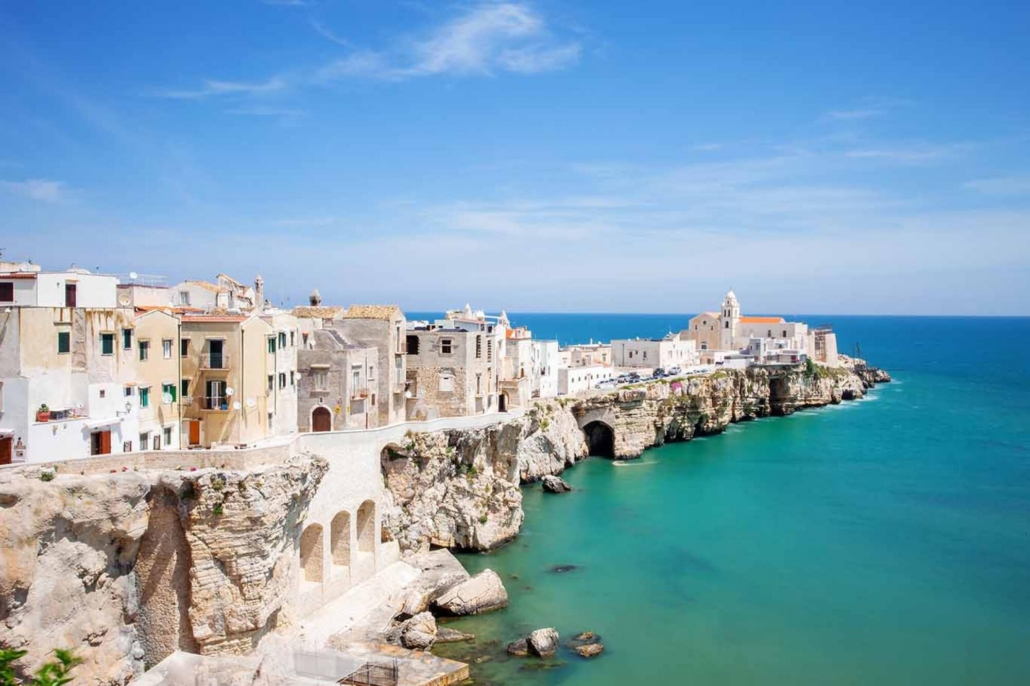
Once a client arrives, Puglia gives back generously. This is a region built around olive groves that stretch to the horizon, whitewashed towns that glow at golden hour, and centuries old farmhouses that have been converted into some of the most memorable stays in Italy.
The Trulli Country
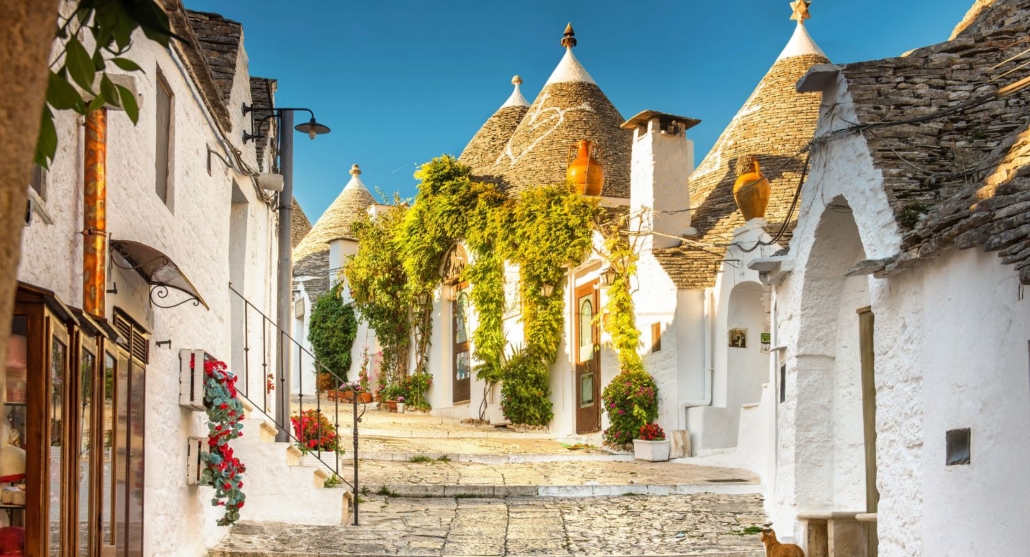
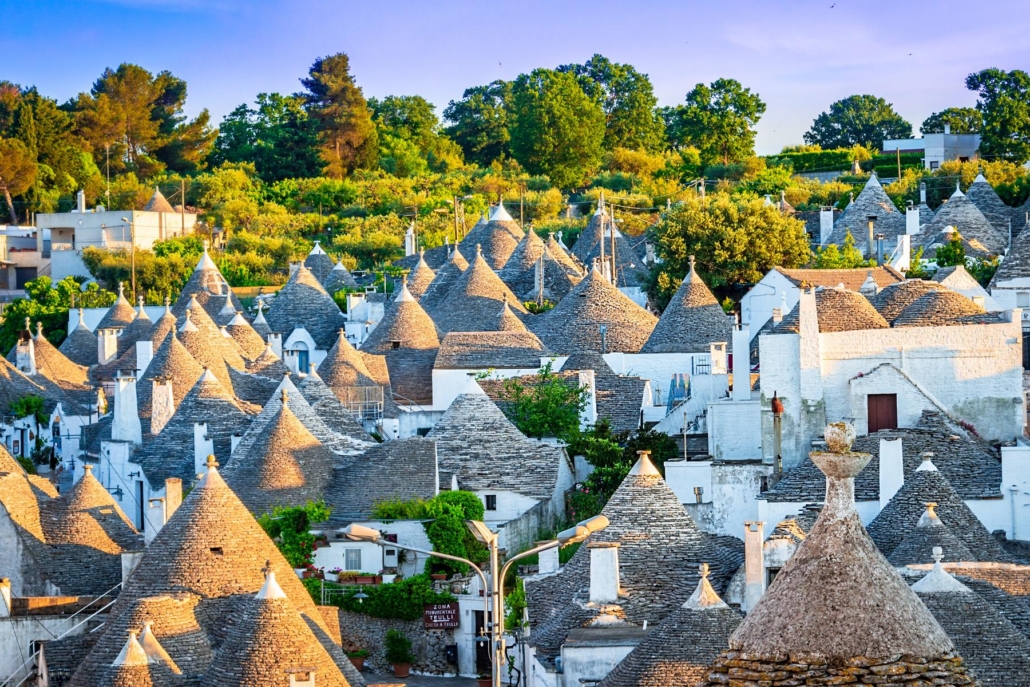
Around Alberobello and the surrounding countryside, the landscape is dotted with trulli, the conical stone huts that look like something out of a fairy tale and exist almost nowhere else on earth. Staying in one, rather than simply photographing it from the road, is where the experience becomes personal instead of just picturesque.
The White Towns
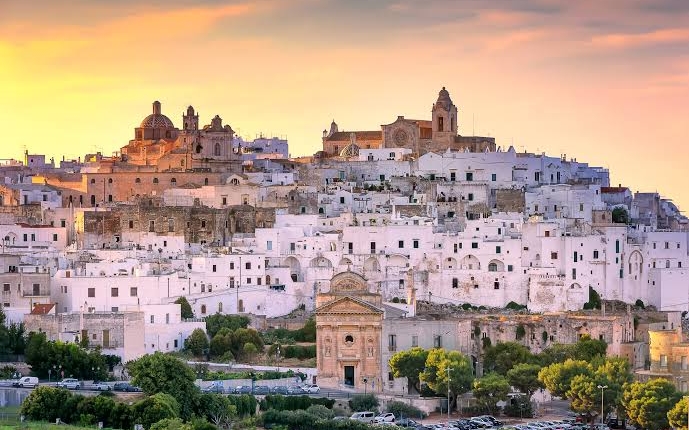
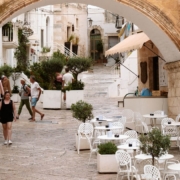
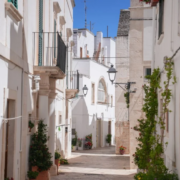
Ostuni and Locorotondo are the postcard towns of Puglia, all whitewashed walls and narrow lanes climbing a hillside. They reward a traveler who wanders without an agenda, who stops for the view and stays for the wine.
Baroque Lecce
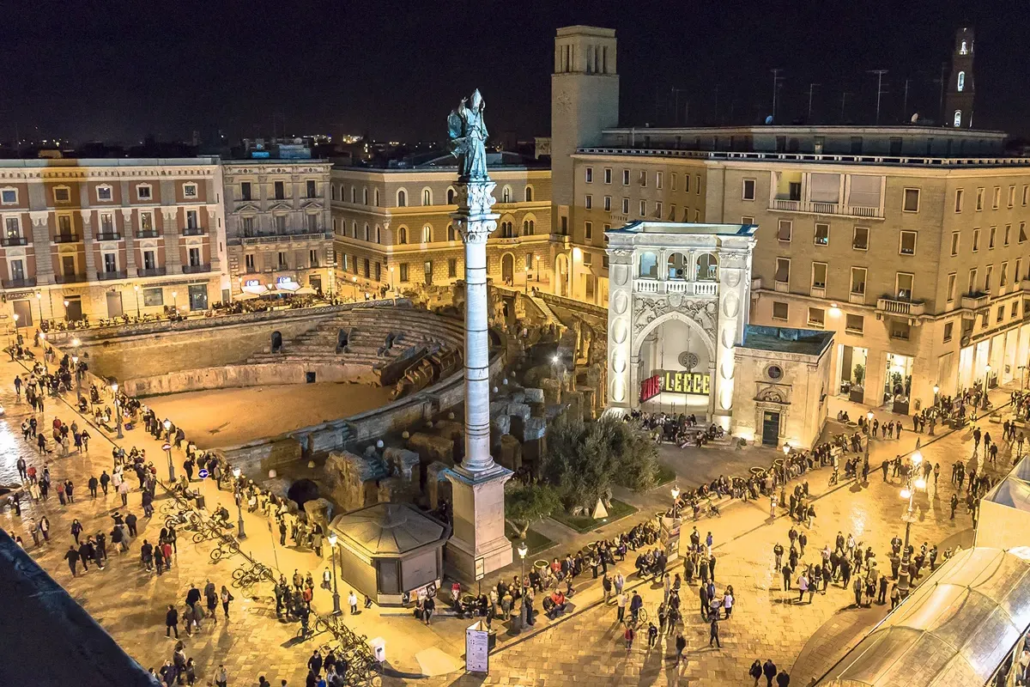
Lecce is Puglia’s answer to a proper city day, with honey colored stone buildings carved in ornate Baroque detail and a food scene that quietly rivals anything in Rome or Florence, without the crowds.
Masseria Stays
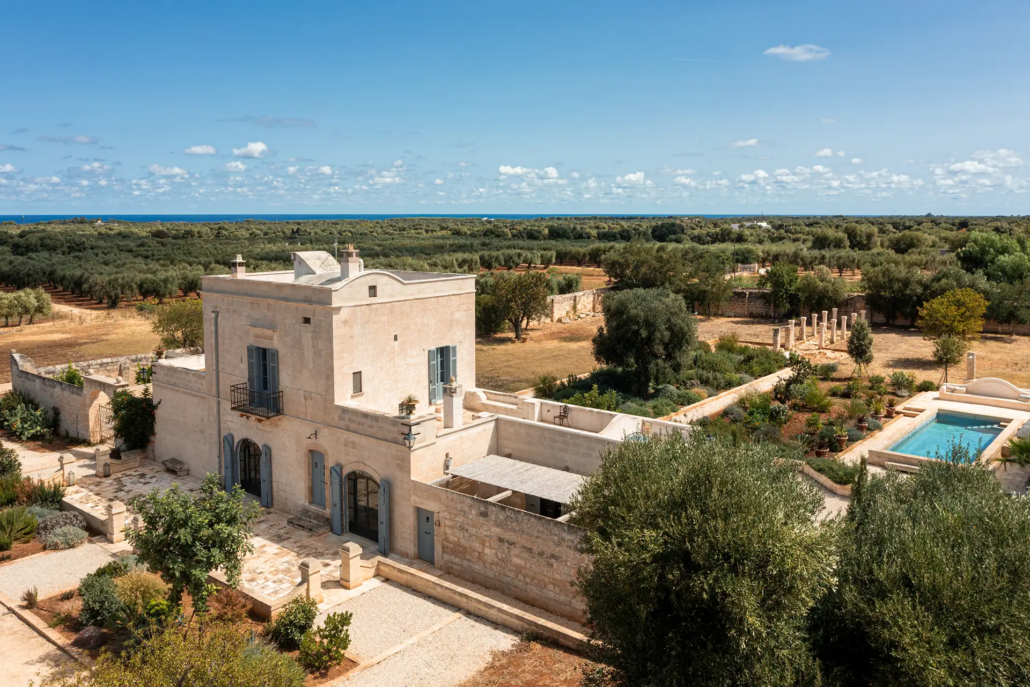
The fortified farmhouses known as masserie have been converted into some of Italy’s most understated luxury properties, many with working olive groves, private pools, and dining rooms that source dinner from the same land the guests are standing on. This is where Puglia moves from sightseeing into something closer to belonging.
Why Puglia Does Not Work as an Add-On
Here is the line we put on the wall for every client who asks about Puglia. Puglia is not a place you add to a trip. It is the trip.
It asks for a dedicated stretch of days, its own set of flights, and a traveler who wants olive groves and white towns and long roads between them more than they want to check another region off a list. Clients who give it that room come home talking about it for years. The ones who try to bolt it onto a week in Rome tend to come home wondering what everyone was going on about, because three rushed days spent mostly in a rental car is not the same trip at all.
Luxury, done well, should never leave a guest doing the math on whether they saw enough. It should feel resolved. That is the standard we hold Puglia to, and it is why we rarely recommend it as a quick stop.
How We Build a Puglia Itinerary
A Puglia trip works best as its own dedicated seven- to ten-day arc, moving slowly from the trulli countryside down through the white towns and into Lecce, with a masseria stay anchoring the middle of the trip rather than a single overnight bookend.
We handle the parts that make a self-planned Puglia trip so easy to get wrong, including:
- Routing flights through the right European connection so travel days do not eat into the trip
- Sequencing towns so driving distances stay reasonable and no day feels rushed
- Selecting masserie and boutique properties that match the traveler, whether that means a working agriturismo or a polished five-star estate
- Arranging private drivers and guides so no one is navigating unfamiliar roads on vacation
- Building in the right amount of unstructured time, because Puglia’s best moments rarely happen on a schedule
Let Us Build Your Puglia Trip
Puglia rewards travelers who give it room to unfold, and that is exactly what we specialize in designing. If you are curious what a dedicated Puglia itinerary could look like for you, reach out for a personal consultation and we will start building it together.
This is a region that deserves to be someone’s whole trip. We would love for it to be yours.
Frequently Asked Questions
Is Puglia worth visiting if I have already seen Rome, Florence, and Venice?
Yes, and in some ways it is more worth it precisely because it is so different from the classic Italian circuit. Puglia trades famous landmarks for olive groves, whitewashed hill towns, and a slower, more immersive pace.
How many days should I plan for a Puglia trip?
We generally recommend seven to ten days. Puglia’s towns sit far apart, and rushing between them undercuts the experience. A dedicated stretch of time lets the trip breathe.
Is Puglia a good fit for a first trip to Italy?
It can be, but it fits best for travelers who are drawn to a slower, countryside style trip rather than a landmark checklist. For a first timer who wants to hit the iconic sights, we often suggest pairing a future Puglia trip with, rather than folding it into, a classic Italy itinerary.
What is a masseria, and are they actually luxurious?
A masseria is a traditional fortified farmhouse, many centuries old, that has been converted into a boutique hotel. The best ones offer working olive groves, private pools, and refined dining, all wrapped in an understated style that defines Puglia’s version of luxury.
How do I get to Puglia from the United States?
There is no direct flight from the States into Puglia’s regional airports. Trips typically connect through Rome or another major European hub before continuing on to Bari or Brindisi. We handle this routing so it fits smoothly into the overall trip.
Can Puglia be combined with a cruise or another region of Italy?
It can, but we typically recommend treating Puglia as its own dedicated trip rather than a quick stop bolted onto another itinerary. If a client wants to extend into a broader Italian or Adriatic experience, we build that as a considered extension rather than a rushed add-on.