Step into a world where ancient traditions meet modern luxury across Asia’s most captivating destinations. As your Asia travel specialist, I curate exclusive experiences that go far beyond the ordinary tourist trail, with deep expertise in Thailand’s hidden gems, Bali’s most sophisticated retreats, and Japan’s refined cultural treasures.

I’ve personally explored Thailand and Bali, building invaluable relationships with premium tour operators on the ground who provide my clients with insider access and exceptional service. From private temple ceremonies in Bangkok to secluded villa experiences in Ubud, and carefully crafted cultural immersions in Kyoto, every detail is designed for the discerning luxury traveler.

Here you’ll find destination guides that reveal Asia’s best-kept secrets, bespoke itinerary inspiration, cultural insights that enhance your journey, and practical luxury travel advice from someone who truly knows these destinations. Whether you’re seeking spiritual awakening in Bali, culinary adventures in Thailand, or the perfect blend of tradition and innovation in Japan, I’ll help you discover Asia through an elevated lens.

Ready to experience Asia in unparalleled luxury? Let’s design your perfect Asian escape together.

Rail travel is one of the most rewarding ways to explore Europe and Japan, giving you a front-row seat to landscapes, culture, and cities that fly-and-drive itineraries almost never reach. If you have been curious about planning a train-based journey, we will walk through three of the most compelling routes in the world, and exactly what makes them worth your time.

There is a moment, somewhere between stations, when you look up from your coffee and realize the landscape outside your window is doing something extraordinary. A vineyard rolls into a medieval hilltop. A glacier appears between two peaks. A bullet train blurs past cherry trees in full bloom.

That moment does not happen on a plane. It barely happens in a car. But on a train, it is practically guaranteed.

Rail travel has made a genuine comeback, and not just for budget backpackers. Discerning travelers are building entire trips around iconic train routes because the journey itself becomes part of the experience. And honestly? Done right, a rail-based itinerary is one of the most elegant ways to travel.

I have helped clients plan rail journeys across Europe and Asia, and the feedback is almost always the same: they wish they had done it sooner. So let me walk you through three of the world’s most rewarding rail routes, and what actually makes them worth planning around.
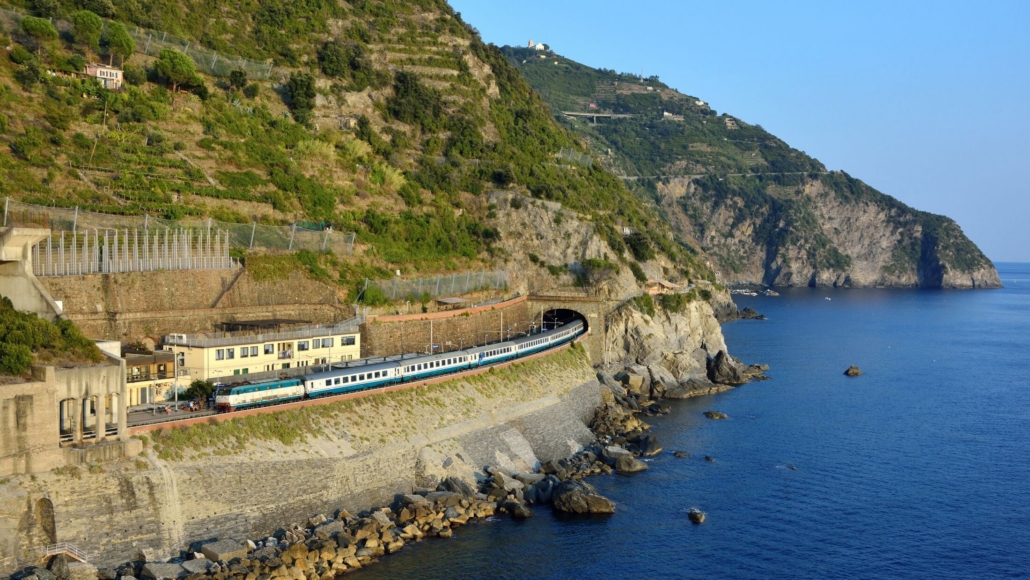
 

Italy by Rail: Cities, Hill Towns, and Coastline

Italy is almost custom-built for rail travel. The country’s network is extensive, the scenery between stops is constantly changing, and you can cover an enormous amount of ground without once wrestling with a rental car, a GPS, or a parking garage in a walled medieval town.

Most itineraries start in Rome or Florence. Both cities reward multiple days of wandering. After you have visited the museums, walked the piazzas, and eaten your way through three courses at a neighborhood trattoria, a short train ride drops you somewhere completely different.

Florence to Venice, for example, takes under two hours on high-speed rail. Florence to the Cinque Terre is a manageable day trip by regional train along the Ligurian coast. And from any of these hubs, slower regional trains push out into the Tuscan countryside toward towns like Siena, Montalcino, or Montepulciano, where the agenda tends to involve wine, olive oil, and very little ambition.

That is the rhythm of a great Italian rail trip. Move between cities on fast trains. Slow down when you reach the countryside. Spend a few days in a hill town or a coastal village before catching the next connection. The variety is remarkable, and the logistics stay genuinely simple.

What makes this work is having someone help you sequence it. Italy’s rail system is excellent, but matching the right stops to the right pace, knowing which regional lines are worth the slower journey, and building in enough time at each destination without overpacking the schedule is where experience matters.
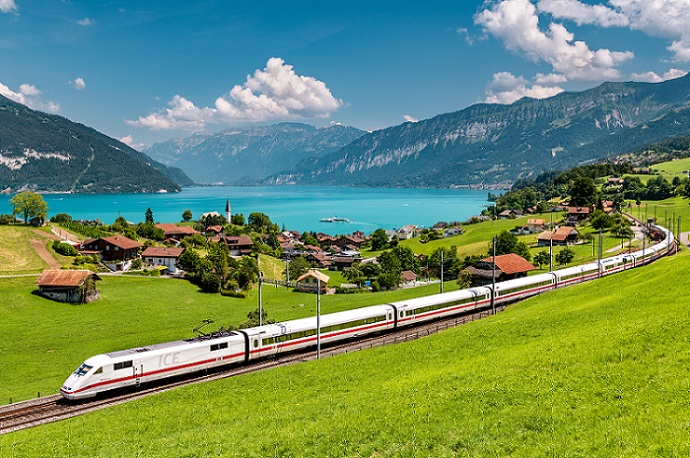
 

Scenic Rail Through the Alps: When the Train Is the Point

Switzerland does scenic rail better than almost anywhere on earth, and they do it with the kind of precision and comfort that makes a three-hour mountain train feel like a luxury experience rather than a commute.

The classic starting point is Zurich or Lucerne, both of which offer beautiful lakefronts, old-town architecture, and easy rail connections into the Alps. From there, several legendary routes branch out.

The Glacier Express between Zermatt and St. Moritz is perhaps the most famous, passing through 91 tunnels and over nearly 300 bridges on its eight-hour journey across some of the most dramatic scenery in Europe. The Bernina Express, connecting Chur to Tirano in northern Italy, crosses a UNESCO-listed railway line that climbs above 7,000 feet before descending into the Italian Lake District.

What strikes most travelers on these routes is how the train itself is designed around the view. Panoramic windows, upper-deck seating, and forward-facing cars mean you are not just moving through the landscape. You are watching it unfold, almost cinematically, with the Alps performing on cue.

Stopping in alpine towns along the way adds another dimension. A few nights in Zermatt (car-free, with direct views of the Matterhorn) or Grindelwald (surrounded by the Eiger, Monch, and Jungfrau) let you trade train seats for hiking trails, mountain gondolas, and evenings in quiet chalet restaurants. The trains work as the connective tissue between experiences rather than just transportation.

One thing worth knowing: Switzerland’s train system also connects cleanly into Austria, France, and northern Italy, which means a rail trip through the Alps can easily expand into a multi-country journey without any complicated logistics.
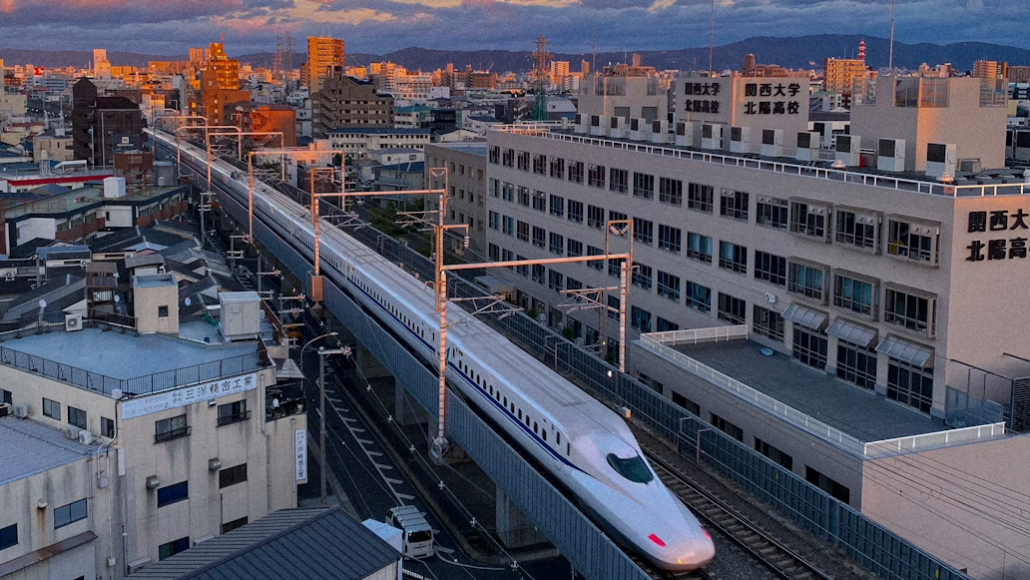
 

Japan by Train: Speed, Serenity, and Everything in Between

Japan’s rail system is in a category of its own. The shinkansen (bullet train) network moves you between major cities at speeds that still feel slightly implausible. Tokyo to Kyoto in roughly two hours and twenty minutes. Kyoto to Hiroshima in another hour. Osaka to Fukuoka in under three. The country encompasses an extraordinary amount of exploration in a relatively short trip.

But Japan’s rail appeal goes well beyond speed. The country’s local and regional lines take you into territory that most visitors never reach. Small onsen towns tucked into mountain valleys. Coastal routes where the train skirts the edge of the Pacific. Rural areas where the landscape shifts between rice paddies, cedar forests, and traditional farmhouses.

A well-designed Japan rail itinerary typically balances the two. You use the Shinkansen to move efficiently between major cities. Tokyo for several days, absorbing the scale and the contradictions. Kyoto for its temples, traditional streets, and cultural depth. Hiroshima and Miyajima for history and one of Japan’s most breathtaking shrine settings. Osaka for food and energy.

Then you layer in the slower routes. A morning train into the Japanese Alps to the old post town of Narai or Tsumago. An evening departure from Kyoto toward the ancient pilgrimage routes of the Kii Peninsula. A local line that climbs into the mountains above Nikko.

The Japan Rail Pass, purchased before departure, makes the economics work elegantly. One cost, unlimited access to most of the network for a set number of days. When I help clients plan Japan trips, sequencing around that pass is one of the most satisfying parts of the process because you can optimize both the experience and the value simultaneously.

One practical note: Japan rewards advance planning more than most destinations. Popular shinkansen routes, especially around cherry blossom season or Golden Week, book up quickly. Having someone who knows the system working on your trip makes a meaningful difference.

Why Rail Travel Deserves a Spot on Your Travel Radar

Beyond the scenery and the romance, rail travel offers genuine practical advantages worth naming directly.

City-center arrivals. Trains pull into the heart of cities, not airports located forty-five minutes from anything worth seeing. You step off at Rome Termini, walk twenty minutes, and you are at the Colosseum. You arrive in Kyoto Station, and the famous Nishiki Market is a short taxi ride away. The contrast with flying is significant.

No security theater. No liquid restrictions. No middle seats or overhead bin anxiety. Rail travel is fundamentally less exhausting than flying, which matters when you want to arrive somewhere with energy rather than just consciousness.

The journey is an experience. On a scenic rail route, the time between stops is not dead time. You are watching Switzerland happen outside your window. You are having a drink in the dining car as the Italian coast passes by. You are experiencing the country, not just transiting it.

For my clients who want more depth and less logistics, rail travel consistently delivers both.

Ready to Plan Your Rail Journey?

Building a rail itinerary that actually works, one that balances the right stops with the right pace and does not leave you stranded on a platform with a suitcase and no reservation, takes some expertise. I have done this across Italy, Switzerland, Austria, and Japan, and I would love to help you design something specific to how you travel.

Whether you are dreaming of a week through Tuscany, a scenic Alpine crossing, or a full Japan Rail Pass adventure, let’s build it together.

Contact us to start planning your rail journey today. I am always happy to talk through options before anything is booked.

Frequently Asked Questions

Do I need to book train tickets in advance in Europe?

For high-speed routes (Italy, France, Spain, Switzerland), advance booking is strongly recommended, especially during peak season. Prices are often lower when booked early, and popular departures do sell out. Regional trains in many countries allow flexible boarding without reservations, but if a specific connection matters to your itinerary, lock it in early.

Is a Japan Rail Pass worth buying?

For most visitors planning to travel between multiple cities, yes. A 14-day JR Pass covers the cost of round-trip shinkansen between Tokyo and Kyoto several times over, plus every regional train you take along the way. The calculation shifts if you are staying in one city for the majority of your trip. I can run the numbers based on your specific itinerary.

How do I handle luggage on train trips?

Luggage management is one of the most underrated parts of planning a rail trip. For Europe, most travelers do fine with a rolling suitcase and carry-on. Japan’s etiquette around large bags on trains is stricter. Many experienced travelers ship luggage between hotels using Japan’s remarkable takuhaibin (courier) service, which is cheap, reliable, and frees you to board trains comfortably. I walk all my Japan clients through this before they go.

What is the most scenic train route for a first-time rail traveler?

If you want maximum impact for minimum complexity, the Bernina Express in Switzerland is hard to beat. It runs year-round, the scenery is consistently stunning, and the route between Chur and Tirano is both UNESCO-listed and genuinely easy to navigate. For a longer commitment, the entire Swiss Travel Pass system is one of the most elegant in the world.

Can I combine rail travel with a cruise or resort stay?

Absolutely, and this is actually one of my favorite ways to design a trip. A river cruise along the Rhine or Danube, for example, pairs beautifully with a rail segment through Switzerland or into Prague. The train handles the longer inter-city legs, the ship handles the scenic stretches along the water, and you never repeat a view. I have built a number of trips around exactly this
combination.

How far in advance should I start planning a rail trip?

For Europe, four to six months ahead gives you excellent seat selection and access to advance pricing on the high-speed routes. Japan requires similar lead time, particularly if you are traveling during cherry blossom season (late March through April) or during Golden Week in early May. That said, I have worked with shorter timelines, so if your window is tighter, reach out and let’s see what’s possible.
I’ll be honest – when we landed in Bangkok, I had my doubts. After spending two incredible days in Chiang Mai (which absolutely stole my heart, by the way), I wasn’t sure how a massive, chaotic city of 10 million would measure up. I’m typically drawn to smaller cities where you can really breathe and connect with the culture.

But Bangkok? It completely won me over.

This city is wild in the best possible way. You’ll turn a corner from a 300-year-old golden temple and find yourself face-to-face with a glittering skyscraper. You’ll eat pad thai from a street cart that’s so good, you’ll never be able to order Thai food at home again without feeling a little disappointed.

We only had two days in Thailand’s capital, but it was enough to fall hard. The energy, the chaos, the unexpected moments of beauty around every corner – Bangkok delivers an experience that’s completely its own. And here’s the thing: it’s a totally different vibe from Chiang Mai’s peaceful spirituality, but equally magical in its own right.

Day One: Heights and Lights

Touching the Sky at Mahanakhon Skywalk

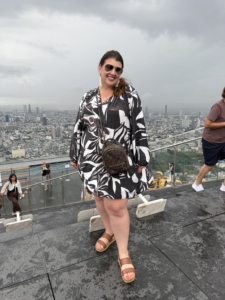
Our Bangkok journey began 314 meters above the bustling streets at the Mahanakhon Skywalk – Thailand’s tallest building and home to one of the world’s most thrilling observation experiences. We’d been watching the weather all day as heavy rain pounded the city, wondering if we’d even get to see anything from the top. But Bangkok’s weather had one more surprise for us – just as we arrived around 6 PM, the clouds miraculously parted, creating the most dramatic sky we could have hoped for.

As the sun began its descent through the clearing storm clouds, it painted the sky in brilliant oranges and pinks against a backdrop of dark, moody clouds. The bird’s-eye view of Bangkok stretches endlessly in every direction. From up there, the notorious Bangkok traffic looked like a gentle stream of twinkling lights reflecting off the wet streets below, ous.

Pro tip: Book your tickets online to skip the lines and time your visit for sunset – the views are absolutely spectacular as the city transforms from day to night.

Tuk Tuk Adventures Under the Stars

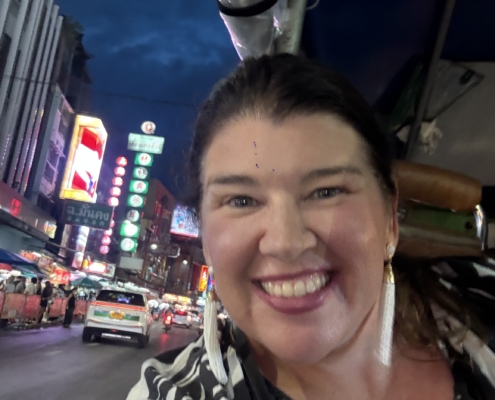
As darkness began to fall, we embraced one of Bangkok’s most iconic experiences: a nighttime tuk tuk tour. I honestly had tears in my eyes as we rode through the neon-lit streets – partly from the wind and partly from pure joy – this was one of the pinch me moments where I can’t believe I’m actually in Bangkok riding a tuk tuk! I’d seen many tuk tuk’s in my travels, but had not yet ever had the opportunity to ride one.

Culinary Discoveries in Chinatown

Our tuk tuk adventure led us straight into the heart of Chinatown, where the real magic began. We wandered deep into Chinatown’s maze of narrow streets, letting our noses guide us as much as our eyes. Before we even saw the stall, we knew we’d found durian – that infamous “king of fruits” – from its powerful, unmistakable aroma that seemed to announce itself from blocks away. We stopped to watch locals expertly eating it with gloves on, their faces showing the pure bliss that only durian lovers understand. (Spoiler alert: I’m not one of them. I will try durian a few days when we travel to Phuket). 

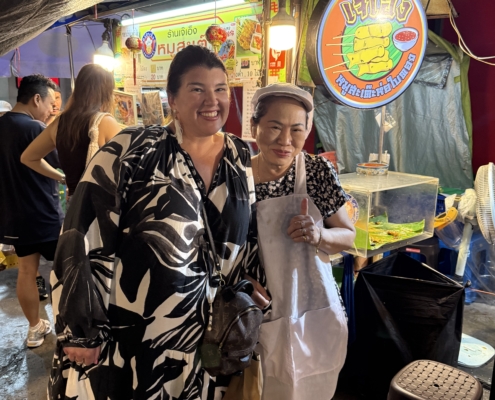
Down one particularly promising alley packed with food carts, our guide stopped us at an unassuming stand. “Best satay in Bangkok,” she declared with absolute confidence. She wasn’t wrong. We ordered both the pork and chicken skewers, each one perfectly charred and smoky. But the real star? The peanut sauce – rich, slightly sweet, with just the right amount of spice – hands down the best I’ve ever tasted. It came with fresh toasted bread (genius for soaking up every last drop of that sauce), crisp cucumber slices, and tangy peppers marinated in what tasted like vinegar and soy sauce. The combination was absolutely perfect. As we left I had the pleasure of meeting the owner. While she spoke no English, she knew by the smile on my face that I was a happy customer. She hugged me as we left – it reminded me that food has no language barriers. 

Still riding the high from those satay skewers, we wandered some more before settling in for a proper sit-down dinner at Canton House, a Chinatown institution that’s been serving hungry locals since 1908. Over a century of perfecting their recipes shows – the egg rolls arrived crackling hot with a satisfying crunch, the cream cheese wontons were indulgent in the best way, and the garlic fried shrimp were cooked to crispy, garlicky perfection. Every dish reminded us why this place has survived (and thrived) for over 115 years.

Day Two: Temples, Tea, and Luxury

Sacred Splendor at Wat Phra Kaew

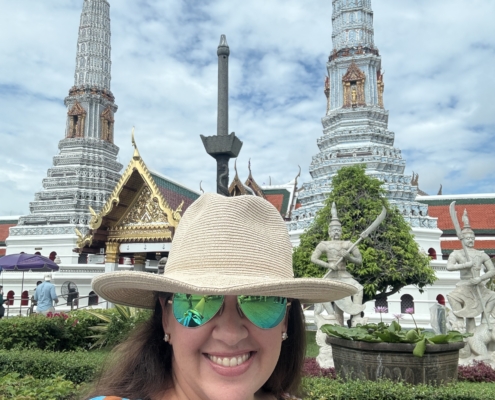
Day two began with a journey into Thailand’s spiritual heart. Wat Phra Kaew, the country’s most revered temple, left us speechless with its magnificent architecture and profound sense of history. Home to the legendary Emerald Buddha – a centuries-old, gold-clad figurine that serves as Thailand’s most sacred religious artifact – the temple complex felt like stepping into a living fairytale.

Adjacent to the temple, The Grand Palace showcased the incredible artistry and grandeur of Thai royalty. Every surface seemed to gleam with intricate details, golden spires, and colorful murals telling ancient stories. The scale and beauty of this royal complex reminded us why it’s considered one of the world’s architectural marvels.

Afternoon Elegance at The Mandarin Oriental

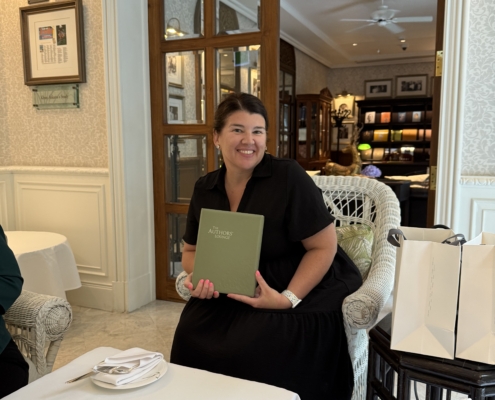
After immersing ourselves in Thailand’s cultural treasures, we treated ourselves to a taste of colonial-era luxury at The Mandarin Oriental Bangkok. The Afternoon Tea at The Authors’ Lounge was pure indulgence – delicate finger sandwiches, freshly baked scones with clotted cream, and an array of exquisite pastries served in an atmosphere of refined elegance. We tried both the vegan and traditional options.

Later we visited the famous Bamboo Bar at the Madrain Oriental. Here, secnes from “The White Lotus”a were filmed. Sitting in this iconic spot, surrounded by the bar’s timeless ambiance, we felt connected to both the hotel’s storied past and its place in contemporary culture. I tried Siam’s Last Word –  Phraya Gold Rum, Corte Vetusto Mezcal, Strega Aperol, Honey, Lemon and Thai Basil

Modern Marvels at IconSiam

We concluded our Bangkok adventure at IconSiam, the city’s stunning riverside shopping and cultural complex. This architectural marvel perfectly embodies Bangkok’s ability to blend tradition with modernity. From luxury boutiques to authentic Thai crafts, world-class dining to cultural exhibitions, IconSiam offered the perfect finale to our two-day journey.

Final Thoughts

Two days in Bangkok proved just enough time to fall completely under the city’s spell, yet nowhere near enough to experience everything it offers. From the spiritual serenity of ancient temples to the sensory overload of street markets, from sky-high panoramic views to intimate cultural moments, Bangkok delivered an adventure that will stay with us forever.

Ready to Experience Bangkok’s Magic for Yourself?

Planning a trip to Thailand can feel overwhelming. Where should you stay in Bangkok? How do you navigate the food scene without missing the hidden gems? Which temples are actually worth the crowds, and how do you time everything perfectly to catch those breathtaking sunsets?

That’s exactly where I come in.

I help travelers craft unforgettable experiences in destinations just like this – whether you’re chasing Instagram-worthy moments, seeking authentic cultural immersion, or looking for that perfect blend of adventure and luxury. I’ve done the research, made the mistakes, and discovered the secrets so you don’t have to.

Let’s plan your Bangkok adventure together. Whether you want to recreate this exact itinerary or customize something uniquely yours, I’ll handle every detail so you can focus on the anticipation and excitement.

Contact me today and let’s turn your Thailand dreams into reality. Trust me – that first tuk tuk ride through the neon-lit streets is waiting for you, and it’s even better than you’re imagining.

I recently returned from an unforgettable trip to Thailand with EVA Air and the Tourism Authority of Thailand. We spent two incredible days in Chiang Mai, and I’m here to tell you: don’t sleep on this gem of Northern Thailand.

While Bangkok gets the spotlight and the southern beaches steal the Instagram feeds, Chiang Mai quietly delivers something truly extraordinary – an authentic blend of ancient spirituality, natural wonder, and cultural immersion that will leave you fundamentally changed.

Let me share why my recent Chiang Mai experience changed me in ways I could have never imagined.

Day One

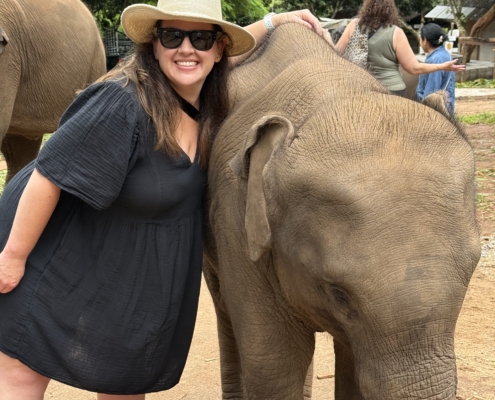
Our first full day took us to Patara Elephant Farm, and within minutes, I understood why this isn’t your typical tourist attraction. This is education and conservation wrapped in pure magic.

Here, you’re not just observing these magnificent creatures from behind barriers. You’re becoming part of their daily routine. You’ll conduct health inspections, prepare their meals, and walk alongside them as they exercise through lush forests and splash in natural water sources. Watching elephant families interact in their natural environment isn’t just Instagram-worthy – it’s soul-stirring.

What sets Patara apart is its commitment to elephant welfare and visitor education. You’ll leave with a deep understanding of these gentle giants and their conservation needs, plus memories that will last a lifetime.

The day continued with lunch at Royal Rose Garden’s Thung Roeng Royal Project – and what a lunch it was! Established in 1978 under HM King Bhumibol’s initiative, this development center works with local hill-tribe farmers to develop sustainable agricultural practices while preserving their cultural identity. The result? Some of the most incredible farm-to-table dining you’ll ever experience.

The noodles were perfection – silky, flavorful, and clearly made from the freshest ingredients. But the real star was their avocado and corn salad, a vibrant dish that showcased the center’s own homegrown avocados (one of their specialty crops alongside ginger, persimmon, and roses). Every bite was a testament to what happens when royal precision meets sustainable farming – fresh, local ingredients prepared with incredible care and attention to detail.

To cap off this incredible day, we headed to Oasis Spa for the 2-hour King of Oasis treatment. This was definitely an experience!

This isn’t just a massage – it’s a complete energy reset using ancient Northern Thai techniques. The treatment begins with traditional acupressure to reopen blocked energy pathways that cause fatigue and weariness. Then comes the magic: Thai herbal hot compresses that literally dissolve soreness from your muscles as they release trapped energy throughout your body. The grand finale is an aromatherapy hot oil massage where powerful herbal essential oils fuse with expert massage techniques to transport you to an entirely new level of relaxation.

I walked in travel-weary and emerged feeling like I could conquer mountains. The combination of these time-honored Northern Thai healing methods creates something truly transformative – your body will thank you for days afterward.

This day was truly magical.

Day Two

Day two delivered what became the most beautiful experience of my entire Thailand journey, and it started before sunrise.

We began at a local market where we prepared offerings for the morning alms ceremony with Buddhist monks. In Buddhist tradition, offering food to monks during their morning alms round is considered one of the most merit-making acts a person can perform. This daily ritual represents the interdependence between the monastic community and lay people – the monks provide spiritual guidance while the community provides sustenance. There’s something profoundly moving about participating in this ancient practice – the quiet reverence, the connection to centuries-old tradition, the simple act of giving that asks nothing in return.

Then we explored the markets full of fresh eggs, meats and vegetables. Even a few silk worms, frogs and fried crickets – a fascinating glimpse into local culinary traditions that adventurous foodies will appreciate.

From there, cycle rickshaws transported us through Chiang Mai’s charming streets to Wat Chedi Luang, home to an impressive 14th-century chedi that once housed the legendary Emerald Buddha.

But here’s what no guidebook can prepare you for: receiving a personal blessing from a Buddhist monk within these ancient walls. The gentle chanting, the sprinkled holy water, the moment of pure peace – it’s impossible to describe adequately, but it’s the kind of experience that stays with you long after you’ve returned home. When I’m writing about it now, I still get chills.

We capped off this extraordinary day by wandering through Chiang Mai’s famous night markets. As the sun set, the streets came alive with a kaleidoscope of colors, sounds, and aromas. Vendors displayed everything from handcrafted textiles and intricate wood carvings to sizzling street food that fills the air with mouthwatering scents. The energy is infectious – locals and travelers alike browsing for treasures, sampling local delicacies, and soaking in the vibrant atmosphere that makes Chiang Mai’s night markets legendary. It was the perfect way to end a day filled with spiritual moments and cultural immersion.

Why Chiang Mai Deserves Your Attention

After traveling to countless cities around the world, I can tell you that Chiang Mai offers something increasingly rare: authentic cultural immersion without sacrificing comfort or safety.

Whether you’re an Adventure Seeker craving off-the-beaten-path experiences, a Picture-Perfect Traveler hunting for those share-worthy moments, or a Multi-Generational Family needing activities that engage every age group, Chiang Mai delivers.

The city’s unique blend of ancient temples, lush landscapes, and vibrant street markets creates the perfect backdrop for any traveler. Adventure enthusiasts will love the elephant interactions and mountain treks. Luxury seekers will appreciate the world-class spas and boutique accommodations. The temples and local traditions will enchant culture lovers.

Your Chiang Mai Journey Awaits

My packed two-day itinerary only scratched the surface of what Chiang Mai offers. The night bazaars, cooking classes, temple hopping, mountain villages, and artisan workshops could easily fill a week or more.

The question isn’t whether you should visit Chiang Mai – it’s when you’re ready to experience Thailand’s most captivating destination.

Ready to discover the magic of Chiang Mai for yourself? I’d love to help you craft your perfect Northern Thailand adventure. From elephant sanctuaries to spiritual experiences, luxury spas to authentic cultural encounters, let’s design an itinerary that creates the memories you’ll treasure forever.

Contact me today to start planning your Chiang Mai journey. Trust me – this is one destination that will exceed every expectation and leave you planning your return before you’ve even left.

My journey to Bali was truly an unforgettable adventure. Undoubtedly, it’s the second most remarkable place I’ve ever had the pleasure of visiting. Bali is a land of captivating beauty and rich culture. Here are the five enchanting places I discovered during my visit to Bali, listed in no particular order.

The Monkey Forest in Ubud

The Monkey Forest was such an amazing experience, even though I AM NOT a fan of the monkeys! I prefer to watch them at a distance. That being said, The Monkey Forest was a highlight of my trip! The beautiful surroundings and the chance to see these incredible creatures up close was truly incredible! As you step into this magical sanctuary, you’re greeted by playful monkeys swinging from tree to tree and having fun around ancient temples. Just remember to hang on to your belongings – these monkeys are famous for their playful antics!

2024-06-11 10.26.41
previous arrowprevious arrow
next arrownext arrow
Shadow

The World Famous Bali Swing

If you’ve ever scrolled Instagram, I’m sure you’ve seen the Bali Swing! When I knew I was going to Bali, doing the swing was a “MUST DO” for me on this trip! It was part adrenaline rush and part breathtaking views! The pictures turned out amazing, and it was a really fun experience! I had a private guide and driver on this day of my trip, which I’d absolutely recommend. They knew all of the places and took me to one of the more ‘off the beaten path’ swing operations, which was much less crowded. I had heard horror stories of waiting hours for each photo and I didn’t want that!


GWK Cultural Park (Garuda Wisnu Kencana)

I’ll be honest, I arrived in Bali without any clue about the GWK. I mean, I knew it was a pretty popular attraction with iconic statues, but I didn’t quite realize what it was. Let me explain – when I landed in Bali, I saw this giant statue on a hill miles away. It was huge, and you could see it everywhere. I knew I had to see it. Once I started asking around, I discovered it was the Garuda Wisnu Kencana statue, or what locals refer to as the GWK. The towering Garuda Wisnu Kencana statue is an iconic landmark symbolizing Indonesia’s rich cultural heritage. It depicts the Hindu god Vishnu riding the mythical bird Garuda.

I spent an entire afternoon leisurely strolling through the park’s lush gardens, culminating in a tour of the inside of the GWK Statue. The GWK Statue is impressive, to say the least. It stands 121 meters tall, including the 46-meter base pedestal (that’s about 397 ft). To put it in perspective, the Statue of Liberty is 93 meters tall (that’s about 311 ft). Visiting the GWK was a highlight of my trip and a ‘must see’ if you are visiting Bali.

2024-06-12 14.32.59 copy
previous arrowprevious arrow
next arrownext arrow
Shadow

Nusa Dua

For more than half of my stay in Bali, I stayed in Bali’s premier luxury resort destination – Nusa Dua. With its pristine white sand beaches, world-class resorts, and upscale dining options, Nusa Dua offers a slice of paradise for those seeking a pampering retreat. While I was there for work, I saw guests around me indulging in a rejuvenating spa treatment, teeing off at one of the championship golf courses, or simply unwinding by the pool with a refreshing cocktail in hand (okay I did have time for this!) Nusa Dua is the perfect blend of luxury and relaxation, making it an ideal destination for a blissful getaway.

North Bali

Bali has changed a lot over the years. Tourism really took off on the island in the 1960’s and today accounts for about 80% of the island’s economy.  North Bali has remained untouched by the expansion of tourism other areas of the island have seen. It’s where you can escape the hustle and bustle of the tourist crowds. Here, you’ll discover unspoiled beaches, serene waterfalls, and traditional villages nestled amidst lush rice terraces.

As we ventured north from Denpasar, the landscape became more rural. It was very similar to what we see when we head to the country, except it was miles and miles of rice fields instead of corn fields. As expected, it was much less crowded and the true natural beauty of Bali shined through.

2024-06-15 01.02.24 copy
previous arrowprevious arrow
next arrownext arrow
Shadow

On our way, we visited the amazing Banyumala Twin Waterfall. The walk down to the waterfall was steep and took about 20 minutes, but it was well worth it! Once we arrived in Lovina, we had dinner at arguably the quirkiest bar/restaurant I’ve ever been to – The Funky Place.

One of North Bali’s most popular experiences is dolphin-watching. We were up before the sun and loaded onto a small boat on Lovina Beach. Seeing the sun rise over the Bali Sea is a moment I will never forget! Shortly after the sun rose a large number of boats descended on a few pods of dolphins. It felt crowded, but seeing the dolphins close up in their natural environment was awesome.

So there you have it—my five favorite moments from Bali! Whether you’re a nature lover, culture enthusiast, or beach bum, Bali has something for everyone! Let’s chat if you are ready to embark on your own Bali adventure and create unforgettable memories in this tropical paradise! Bali has so much to offer!

Planning a trip to Bali? Subscribe to my email list and get my complete Bali Travel Guide—packed with where to stay, what to do, and how to avoid common mistakes.