Tag Archive for: luxury travel Italy

Puglia sits far from Rome and the usual Italian circuit, with no direct flights from the States and towns spread across a slow, sun bleached landscape, and that is exactly why it rewards travelers who give it a dedicated trip instead of a quick stop. We build proper Puglia itineraries, from trulli covered countryside to whitewashed hill towns to centuries old masserie, so the days flow the way this region is meant to be experienced.

Puglia has been the up and coming region of Italy for a while now, and it stays up and coming for one simple reason. It is hard to reach. There is no direct flight from the States, the towns sit far apart from each other, and the whole region lies a long way from everywhere your itinerary already wants to go. That is exactly what keeps it from tipping over into the mainstream, and exactly what makes it worth the effort.

Why Puglia Stays Off the Beaten Path

Most of Italy rewards a traveler who wants to move fast. Rome, Florence, and Venice sit close enough together that a well planned week can touch all three. Puglia does not work that way. It stretches down the heel of Italy’s boot, a region of long, flat drives between towns that each deserve a full day of their own. There is no bullet train shortcut and no direct flight into Bari or Brindisi from the United States, so every trip there starts with a connection through Rome or another European hub.

That extra effort is precisely why the region has held onto its character. The towns have not been reshaped around tour buses. The restaurants still cook for the neighborhood first. And the pace, slow, sun warmed, unhurried, is the whole point.
What Makes Puglia Worth the Trip

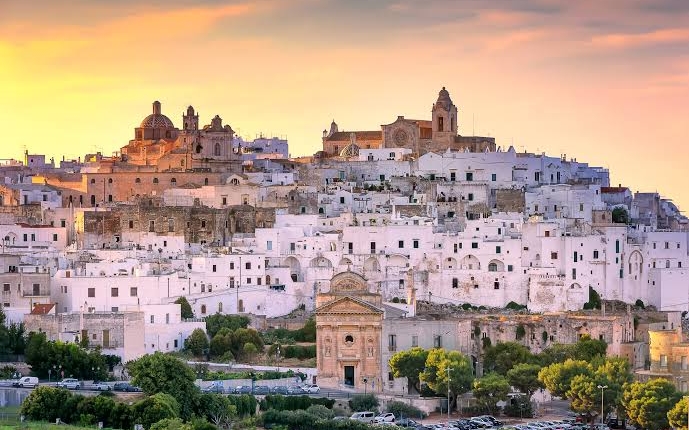
Once a client arrives, Puglia gives back generously. This is a region built around olive groves that stretch to the horizon, whitewashed towns that glow at golden hour, and centuries old farmhouses that have been converted into some of the most memorable stays in Italy.

The Trulli Country

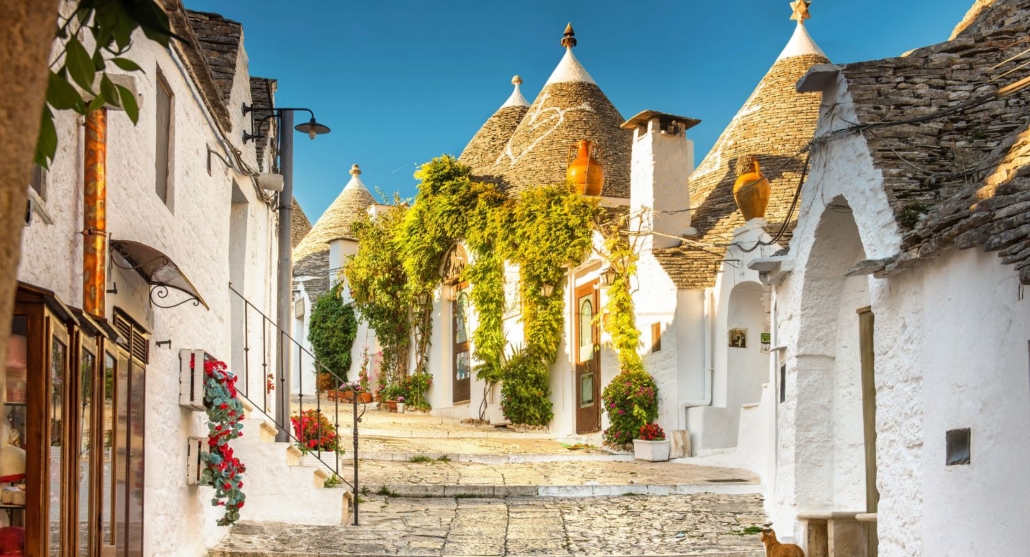
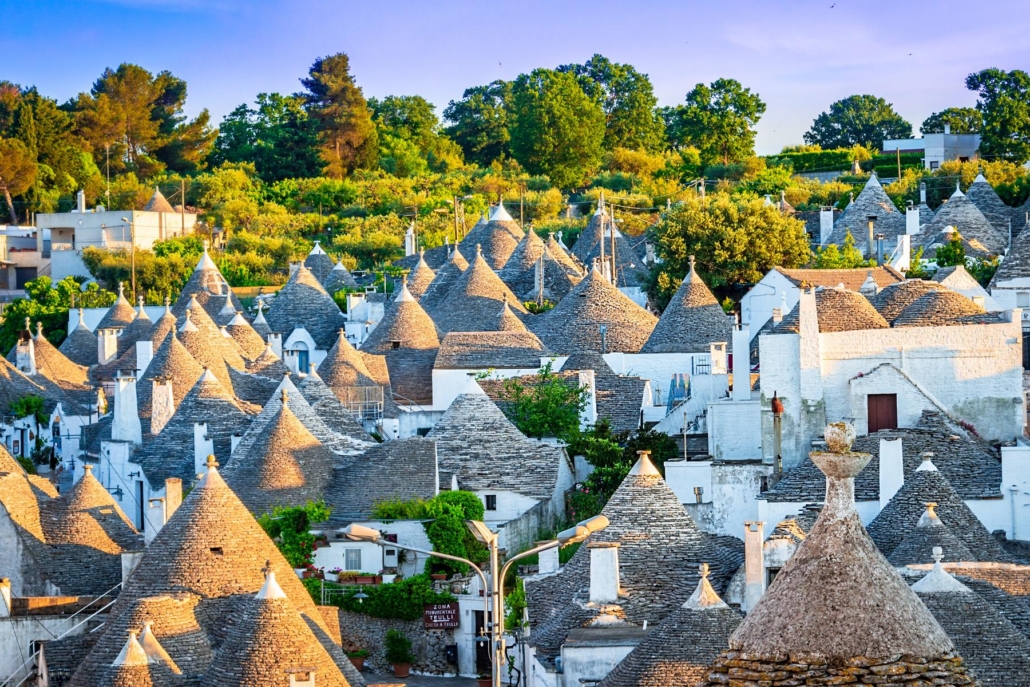
Around Alberobello and the surrounding countryside, the landscape is dotted with trulli, the conical stone huts that look like something out of a fairy tale and exist almost nowhere else on earth. Staying in one, rather than simply photographing it from the road, is where the experience becomes personal instead of just picturesque.
The White Towns

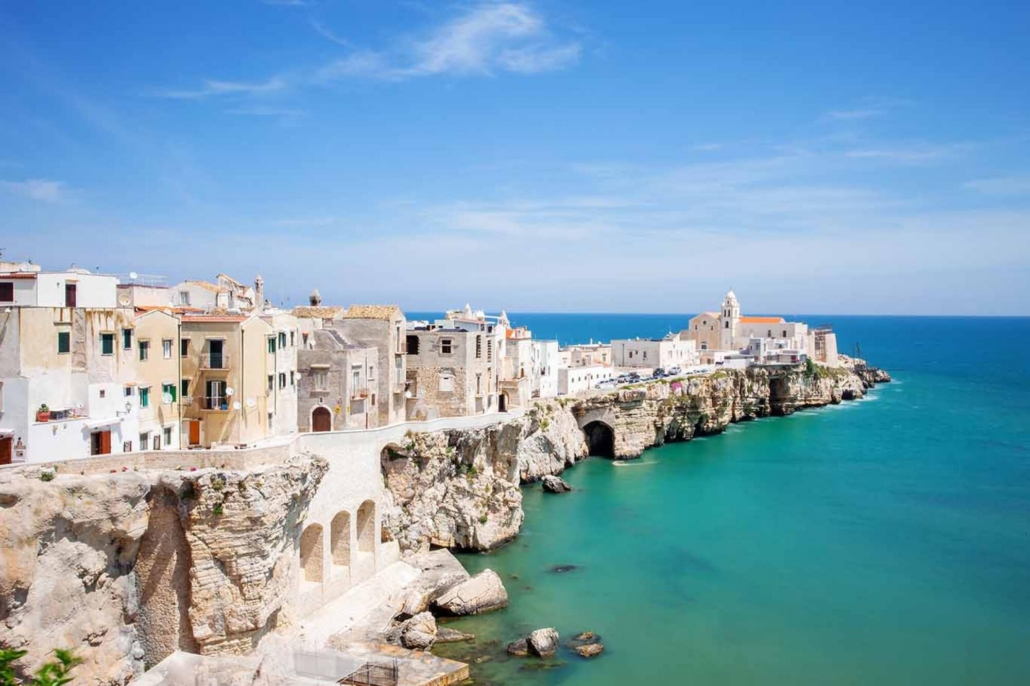
Ostuni and Locorotondo are the postcard towns of Puglia, all whitewashed walls and narrow lanes climbing a hillside. They reward a traveler who wanders without an agenda, who stops for the view and stays for the wine.
         

Baroque Lecce

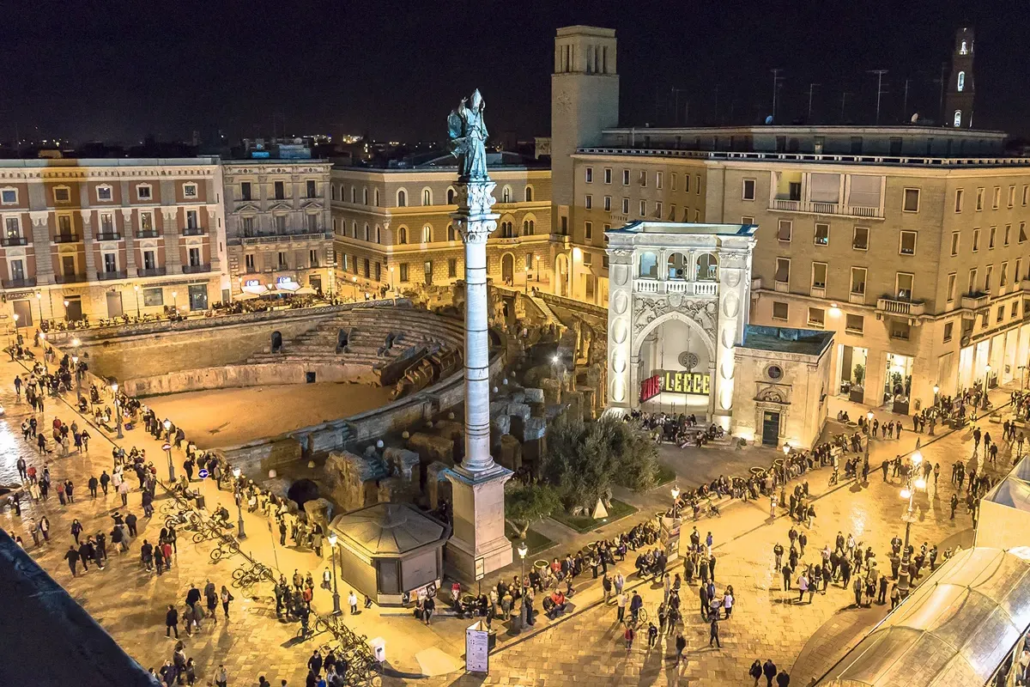
Lecce is Puglia’s answer to a proper city day, with honey colored stone buildings carved in ornate Baroque detail and a food scene that quietly rivals anything in Rome or Florence, without the crowds.
Masseria Stays

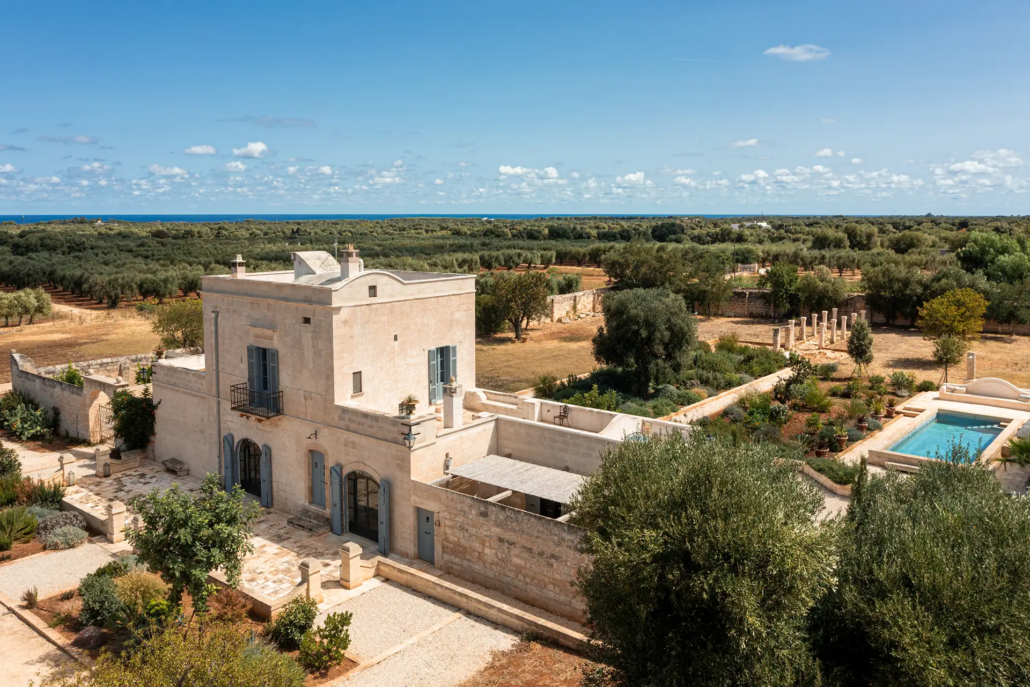
The fortified farmhouses known as masserie have been converted into some of Italy’s most understated luxury properties, many with working olive groves, private pools, and dining rooms that source dinner from the same land the guests are standing on. This is where Puglia moves from sightseeing into something closer to belonging.
Why Puglia Does Not Work as an Add-On

Here is the line we put on the wall for every client who asks about Puglia. Puglia is not a place you add to a trip. It is the trip.

It asks for a dedicated stretch of days, its own set of flights, and a traveler who wants olive groves and white towns and long roads between them more than they want to check another region off a list. Clients who give it that room come home talking about it for years. The ones who try to bolt it onto a week in Rome tend to come home wondering what everyone was going on about, because three rushed days spent mostly in a rental car is not the same trip at all.

Luxury, done well, should never leave a guest doing the math on whether they saw enough. It should feel resolved. That is the standard we hold Puglia to, and it is why we rarely recommend it as a quick stop.
How We Build a Puglia Itinerary

A Puglia trip works best as its own dedicated seven- to ten-day arc, moving slowly from the trulli countryside down through the white towns and into Lecce, with a masseria stay anchoring the middle of the trip rather than a single overnight bookend.

We handle the parts that make a self-planned Puglia trip so easy to get wrong, including:

  • Routing flights through the right European connection so travel days do not eat into the trip
  • Sequencing towns so driving distances stay reasonable and no day feels rushed
  • Selecting masserie and boutique properties that match the traveler, whether that means a working agriturismo or a polished five-star estate
  • Arranging private drivers and guides so no one is navigating unfamiliar roads on vacation
  • Building in the right amount of unstructured time, because Puglia’s best moments rarely happen on a schedule
Let Us Build Your Puglia Trip

Puglia rewards travelers who give it room to unfold, and that is exactly what we specialize in designing. If you are curious what a dedicated Puglia itinerary could look like for you, reach out for a personal consultation and we will start building it together.

This is a region that deserves to be someone’s whole trip. We would love for it to be yours.

Frequently Asked Questions

Is Puglia worth visiting if I have already seen Rome, Florence, and Venice?

Yes, and in some ways it is more worth it precisely because it is so different from the classic Italian circuit. Puglia trades famous landmarks for olive groves, whitewashed hill towns, and a slower, more immersive pace.

How many days should I plan for a Puglia trip?

We generally recommend seven to ten days. Puglia’s towns sit far apart, and rushing between them undercuts the experience. A dedicated stretch of time lets the trip breathe.

Is Puglia a good fit for a first trip to Italy?

It can be, but it fits best for travelers who are drawn to a slower, countryside style trip rather than a landmark checklist. For a first timer who wants to hit the iconic sights, we often suggest pairing a future Puglia trip with, rather than folding it into, a classic Italy itinerary.

What is a masseria, and are they actually luxurious?

A masseria is a traditional fortified farmhouse, many centuries old, that has been converted into a boutique hotel. The best ones offer working olive groves, private pools, and refined dining, all wrapped in an understated style that defines Puglia’s version of luxury.

How do I get to Puglia from the United States?

There is no direct flight from the States into Puglia’s regional airports. Trips typically connect through Rome or another major European hub before continuing on to Bari or Brindisi. We handle this routing so it fits smoothly into the overall trip.

Can Puglia be combined with a cruise or another region of Italy?

It can, but we typically recommend treating Puglia as its own dedicated trip rather than a quick stop bolted onto another itinerary. If a client wants to extend into a broader Italian or Adriatic experience, we build that as a considered extension rather than a rushed add-on.
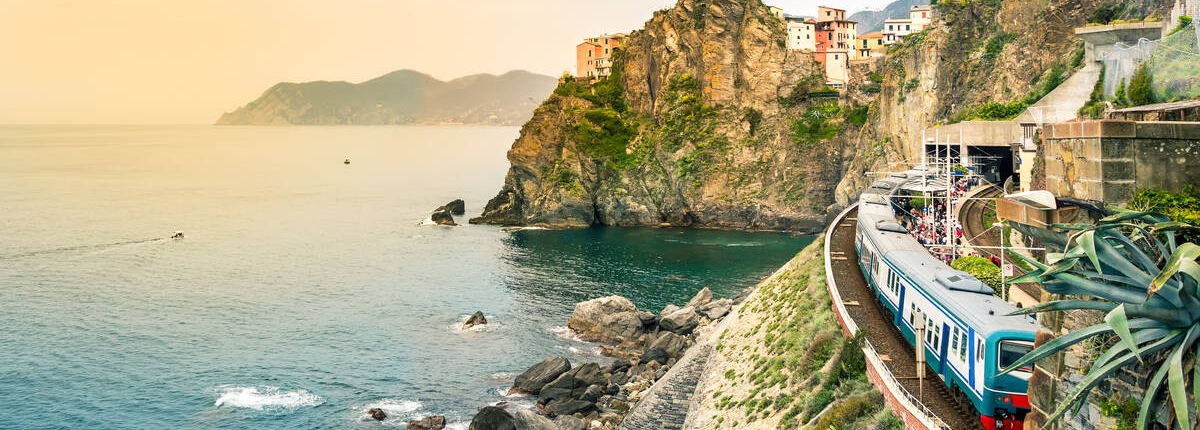
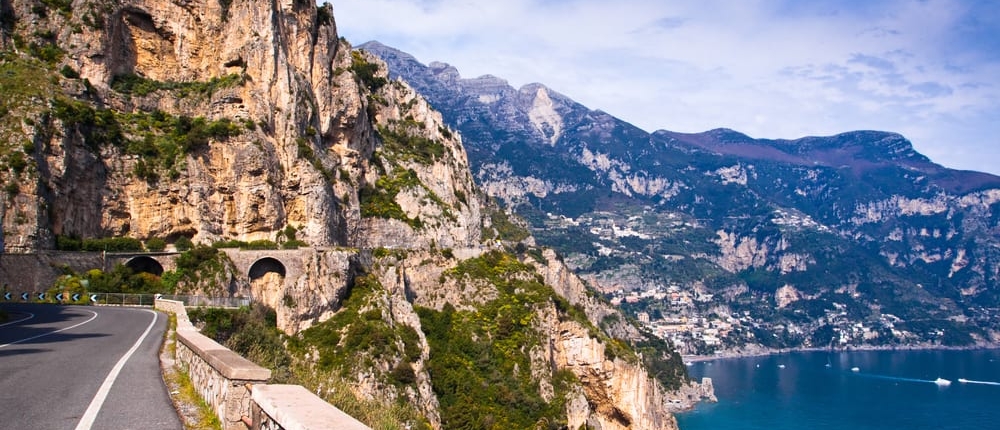
Both Cinque Terre and the Amalfi Coast are genuinely stunning, but they deliver completely different experiences at completely different price points and stress levels. This guide breaks down every real difference so you can choose the one that actually fits your trip.


If you’ve spent any time researching an Italy itinerary, you’ve landed on this exact debate. Both destinations are on every ‘bucket list Italy’ roundup. Both show up in the same dreamy travel photos. And both will absolutely disappoint you if you arrive expecting the wrong thing.

We’ve visited both. Here’s the honest breakdown.

Getting There: One Is Easy, One Is Not

This is where the two destinations separate immediately, and most travel blogs gloss right over it.

Cinque Terre

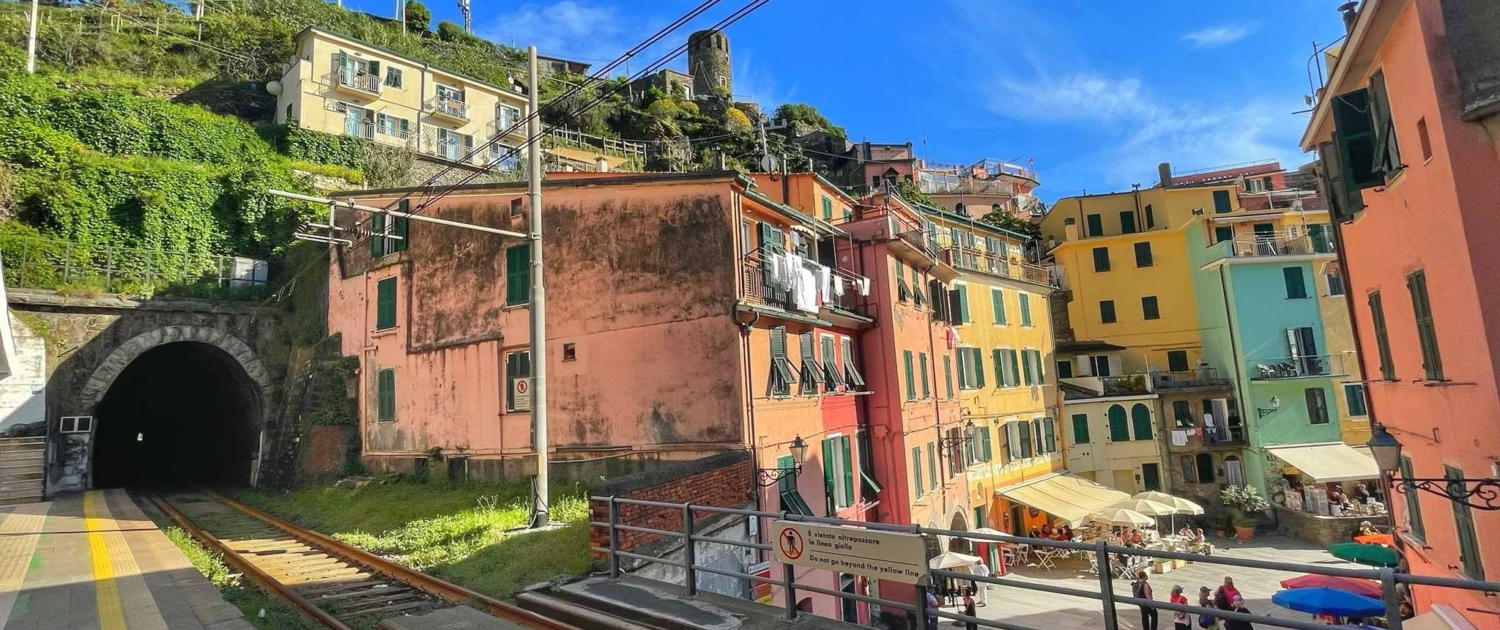
Cinque Terre is a train destination. A regional train runs through all five villages every few minutes. From Florence, you’re looking at about 2 hours and 10 minutes on a direct train to La Spezia, the regional hub. From Milan, it’s under 2 hours. You step off the train in a village. No car rental, no taxi coordination, no navigating mountain roads. It fits naturally into a northern or central Italy itinerary without adding significant travel time.

The Amalfi Coast

The Amalfi Coast is a southern Italy destination, and getting there is a project. The nearest major hub is Naples. There is no train to the coast itself. You’ll take the high-speed train from Rome to Naples (about 1 hour 10 minutes), then continue by ferry, bus, or private transfer to your specific town. Rome to Positano typically runs 3 to 4 hours total, depending on connections.

If your itinerary is already Naples-based, that’s one thing. If you’re building an itinerary from scratch, adding the Amalfi Coast adds a real commitment.

Getting Around: The Sharpest Difference Nobody Warns You About

This is where the gap becomes undeniable.

Cinque Terre is as close to logistics-free travel as Italy gets. Trains run constantly between villages. The Cinque Terre Card gives you unlimited travel on the Levanto to La Spezia line. There are no cars in the villages. Once you arrive, you stop thinking about transportation entirely.

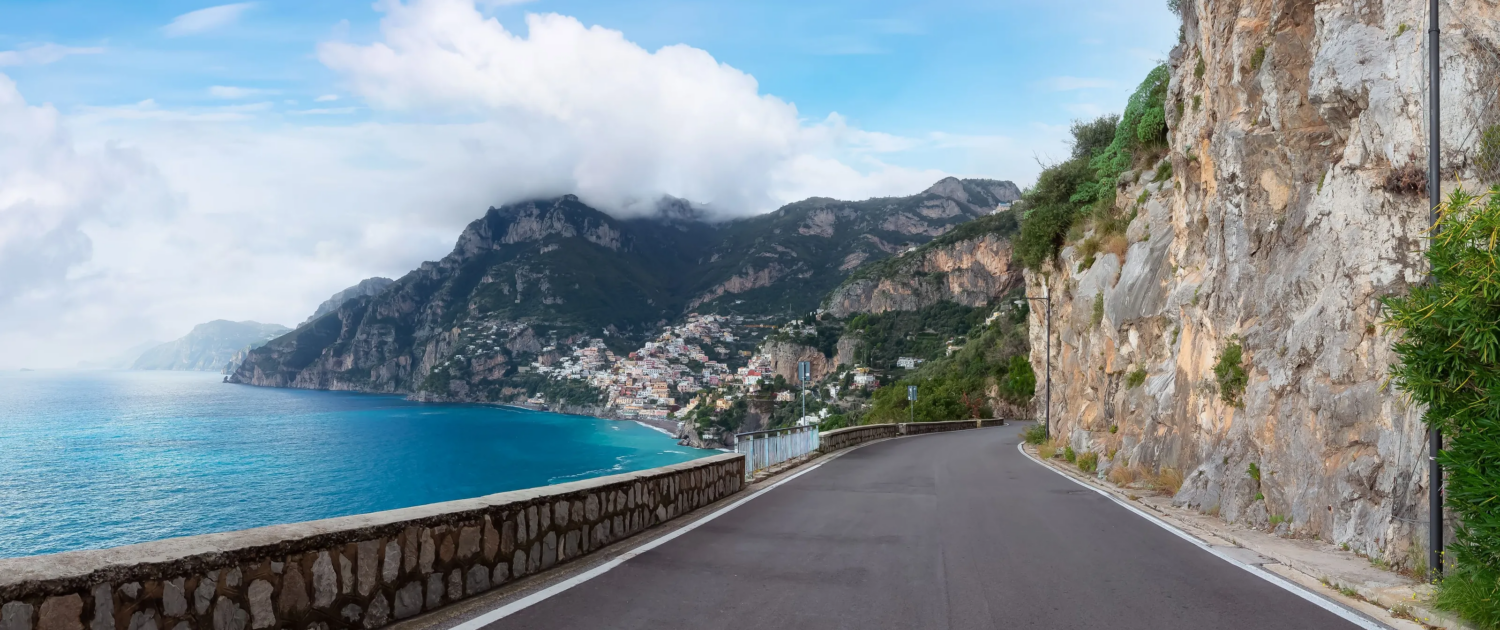
The Amalfi Coast is one of the most logistically demanding destinations in Italy. The SS163, the coastal road, is a single-lane road carved into a cliff that was originally built for donkeys. In summer it becomes gridlocked for hours. Tour buses and private cars compete for space on blind bends. An odd/even license plate restriction runs from Easter to September between 10am and 6pm. You won’t know your rental plate until you collect the car, and violations are automatic fines.

The SITA bus is cheap and it runs, but in peak season buses fill to capacity at the first stop. Passengers at later stops are regularly left on the curb to wait for the next one, sometimes in summer heat for over an hour. The ferries are genuinely beautiful and the best way to experience the coastline, but they cancel without warning in anything beyond calm conditions. When they cancel, the buses overflow, the road gridlocks, and your afternoon plans evaporate.

Planning every single day’s movement is part of the Amalfi Coast experience. That’s either fine with you or it isn’t.

The Real Price Difference

Cinque Terre is expensive for what it is (fishing villages), but it’s manageable. A meal away from the main harbor runs about 12 to 18 euros for a main course. Using La Spezia as a base instead of staying in the villages cuts accommodation costs roughly in half. A Cinque Terre Card runs 7.50 to 15 euros depending on the day.

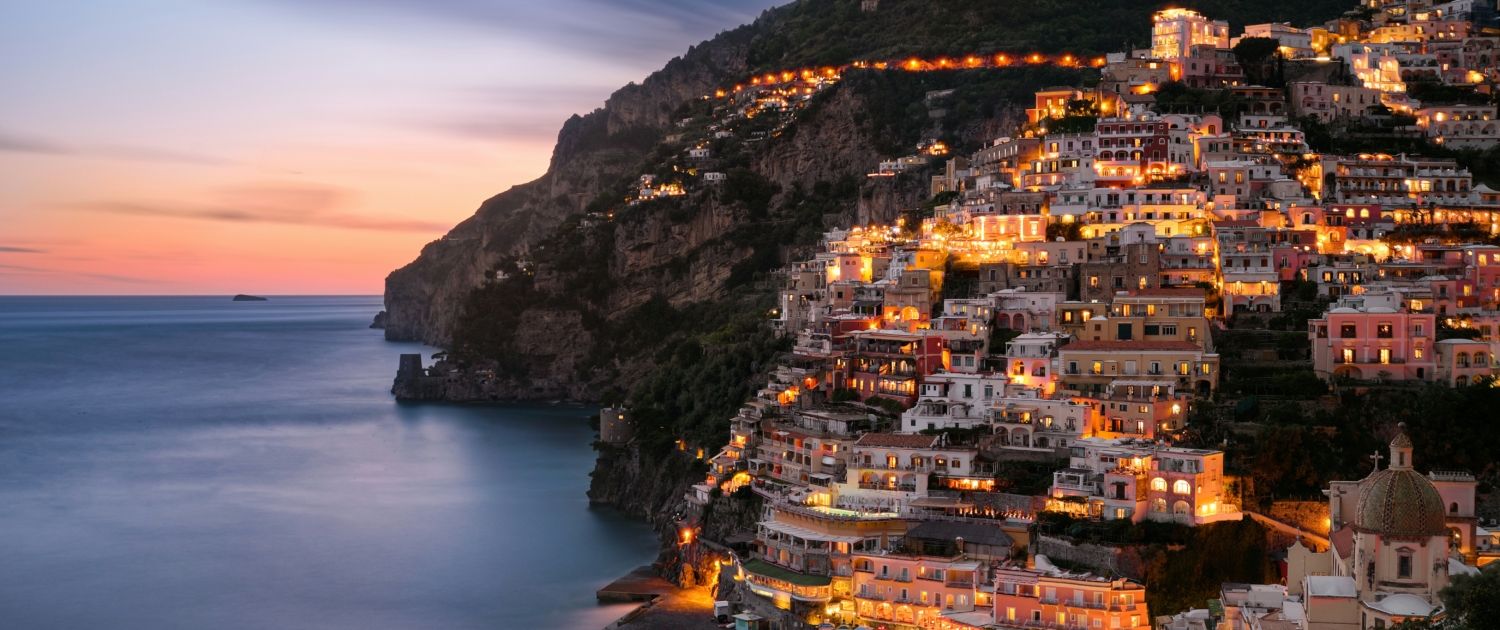
The Amalfi Coast operates at a fundamentally different price level. In Positano, a mid-range restaurant dinner runs about 50 euros per person. A sunbed on Spiaggia Grande costs 60 to 70 euros for the day. Hotel rooms in Positano start at 300 euros per night in season, and most decent options are above that. Taxis between towns start at 20 euros and scale up fast.

A realistic daily budget comparison:

Cinque Terre, based in La Spezia: 80 to 130 euros per person per day covering accommodation, food, transport, and activities.

Amalfi Coast in the main towns: 245 to 500 euros per person per day for a comparable experience.

If budget is a genuine consideration, these are not interchangeable options.

Beaches: Lower Your Expectations at Both

Neither destination is a beach holiday. Knowing this before you book matters.

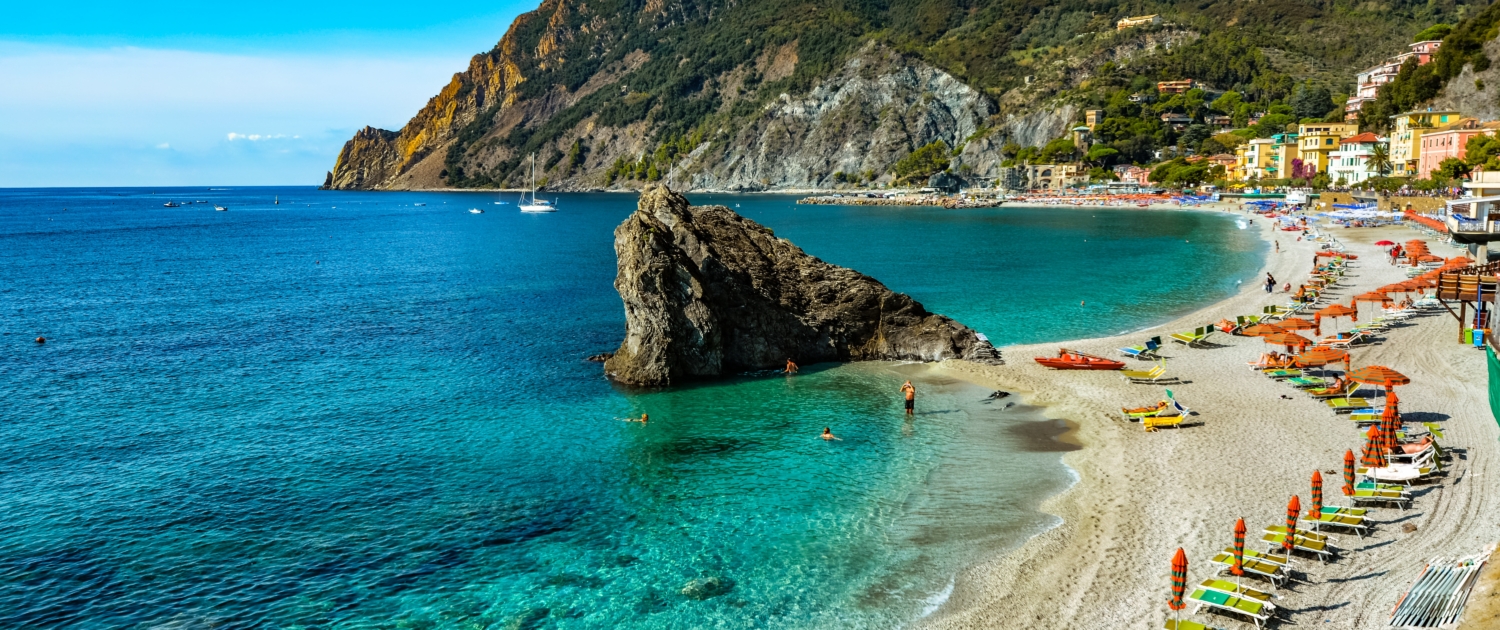
Cinque Terre has exactly one sandy beach: Monterosso al Mare. The other four villages have rocky shores, concrete platforms, and ladders into the water. Corniglia has no beach at all.

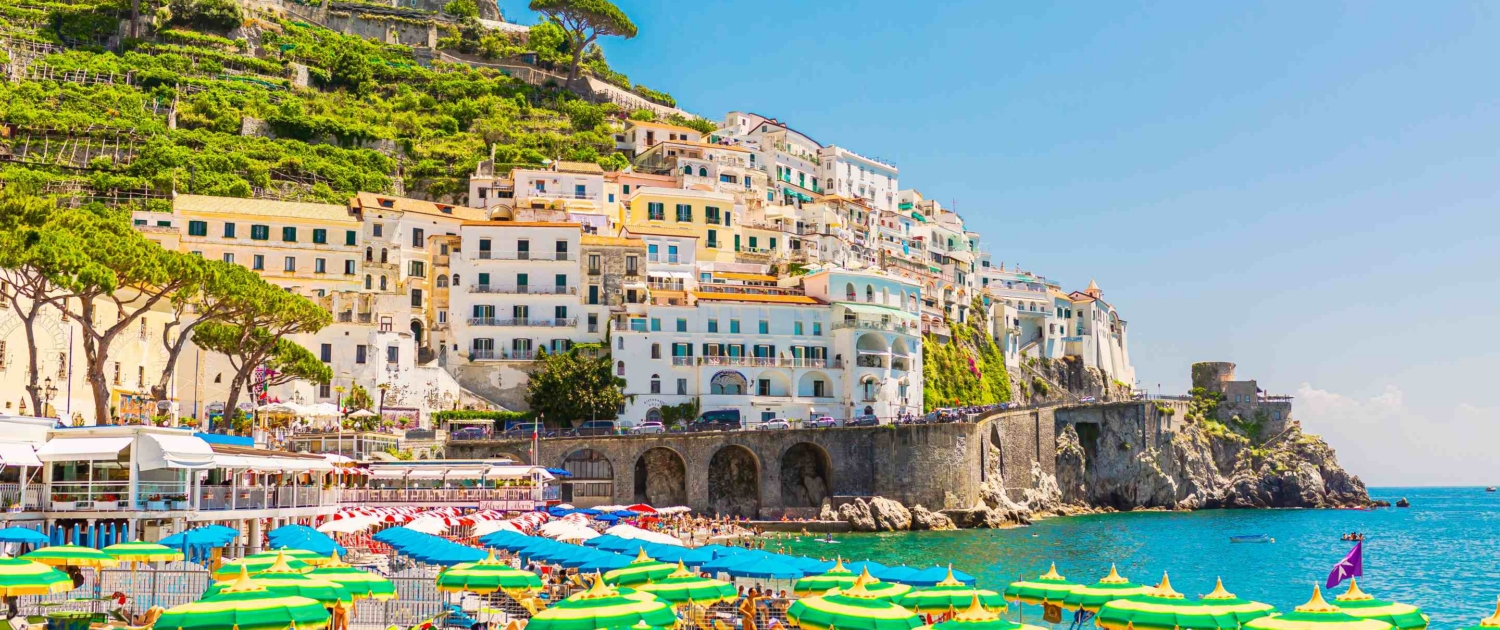
The Amalfi Coast has more variety, but the famous beaches are smaller and more expensive than the photos suggest. Positano’s Spiaggia Grande is a pebble beach. The paid sunbeds at 60 to 70 euros per day dominate it. Free sections exist but are minimal.

The best swimming on the Amalfi Coast is actually in the quieter eastern towns: Atrani, Minori, Cetara. None of them look like the Instagram version. If you want genuine sandy beaches in Italy, Sardinia, Puglia, or the Cilento coast will deliver what these two destinations promise but rarely provide.

Hiking: Both Are Great, for Different Reasons

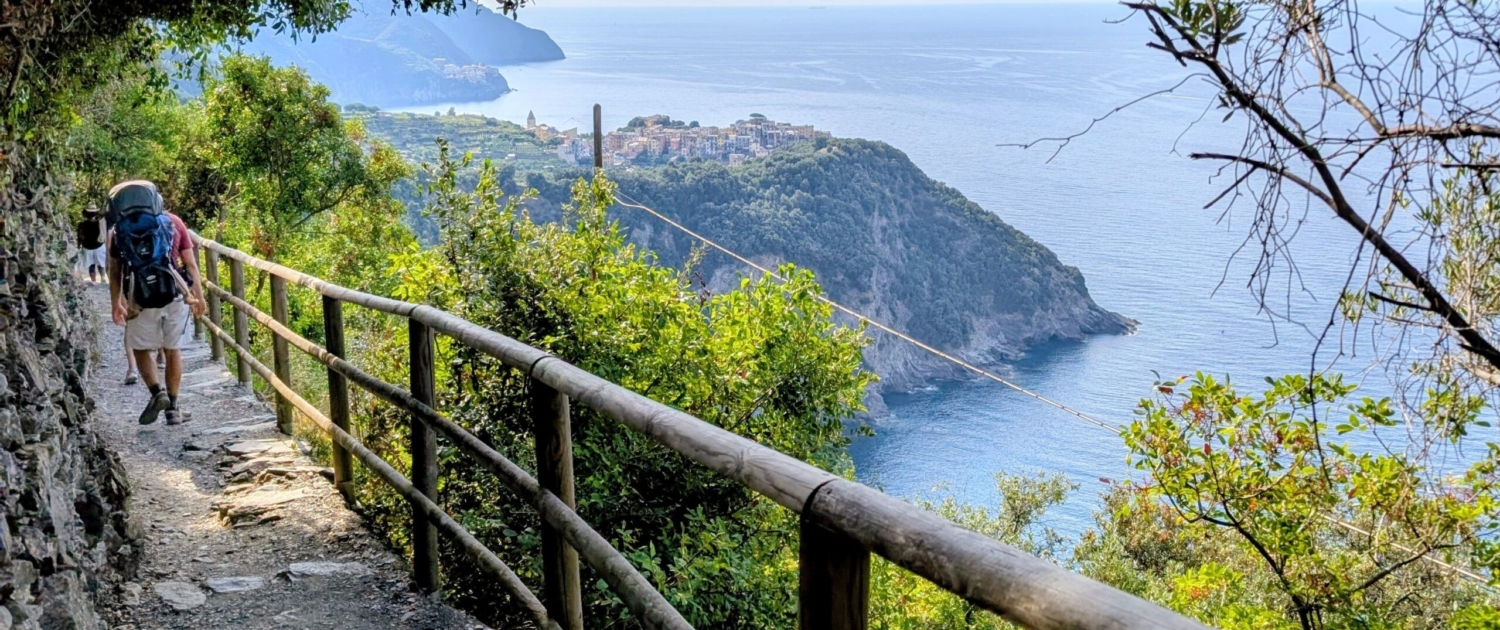
Cinque Terre hiking is straightforward to plan. The Alta Via delle Cinque Terre ridge trail requires no card and carries almost no crowds. The Levanto to Monterosso trail via Punta Mesco is free, largely empty, and offers better views than the paid coastal trail. Even the Sentiero Azzurro sections route you logically between villages with the train always available as a backup.

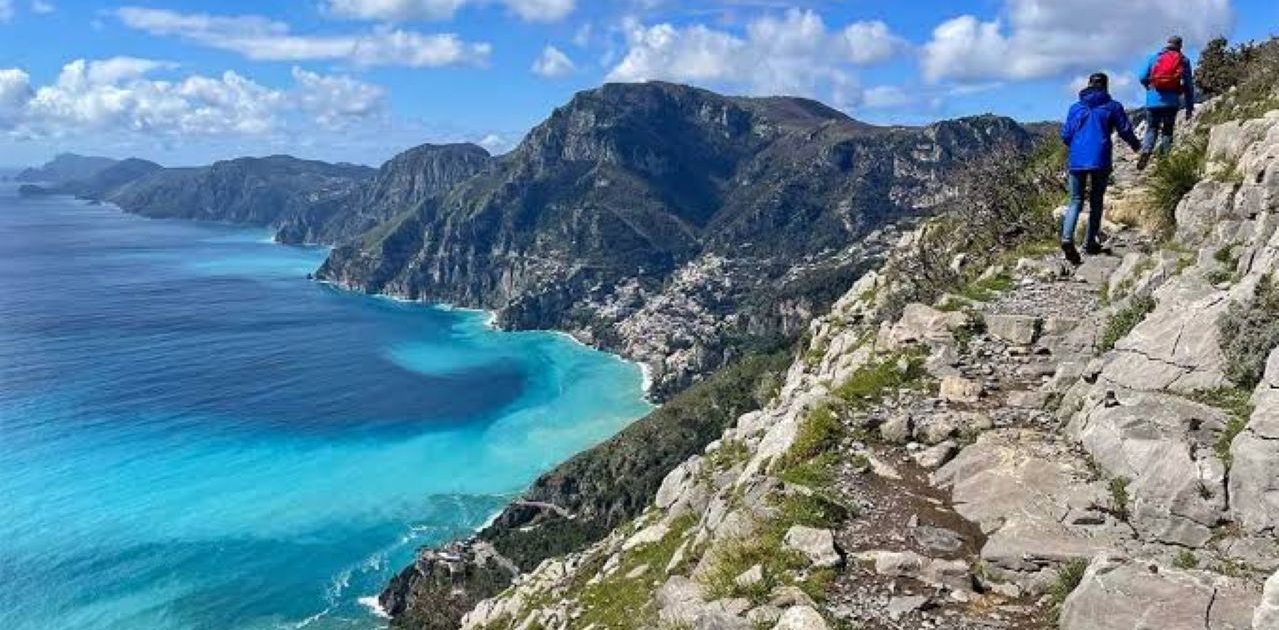
The Amalfi Coast’s standout hike is the Path of the Gods (Sentiero degli Dei), and it earns the name. The trail runs 6.5 kilometers from Bomerano to Nocelle above Positano at 500 to 630 meters above sea level, with views of the full coast, Capri, and the Faraglioni. It takes about 3 hours at a comfortable pace. Spring and autumn are the ideal seasons. Summer heat on the exposed sections is punishing.

The catch is logistics. Reaching the trailhead involves two separate buses. The hike ends at Nocelle, where 1,700 stone steps descend to Positano. Many hikers book a private transfer to the trailhead rather than attempting the bus combination. The Path of the Gods is one of the most beautiful walks in Italy. It just requires a full day of planning to execute.

What Each Destination Actually Is

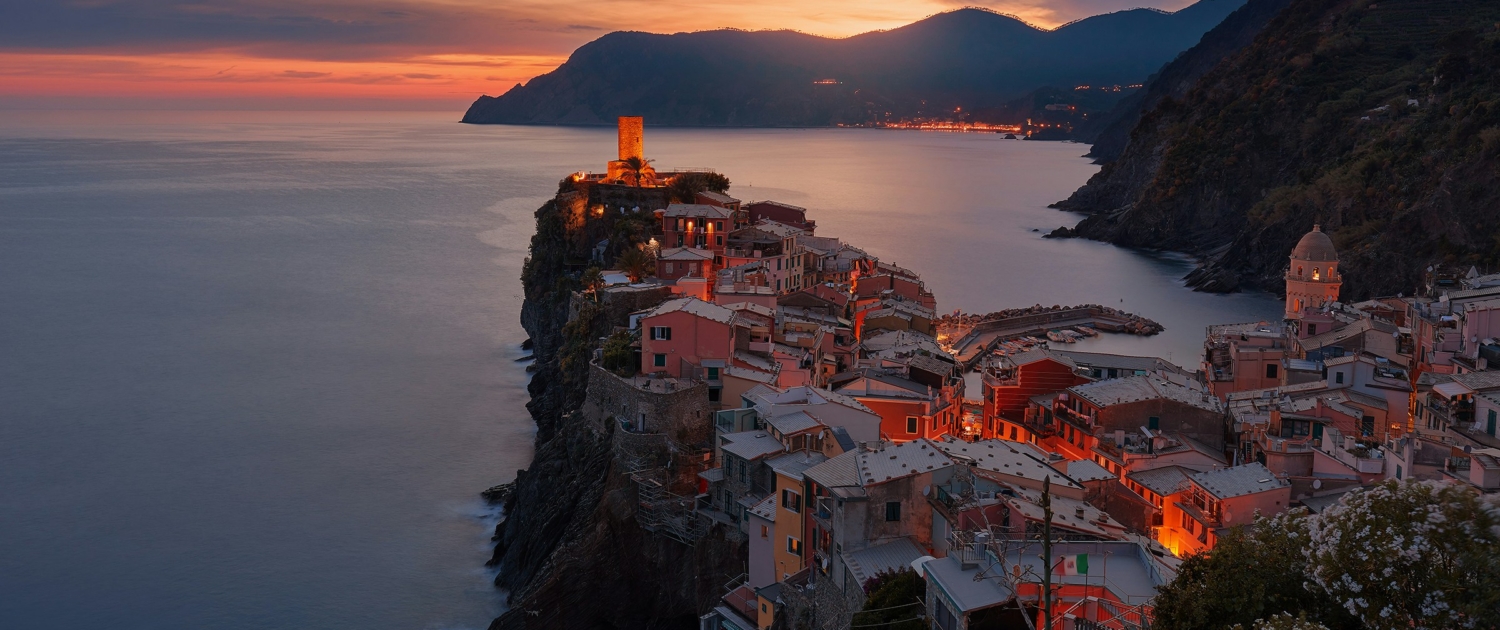
Cinque Terre is a hiking and walking destination built around five small fishing villages. The magic is the trail, the terraced vineyards, the views from the ridge, and the quiet that returns to the villages after 6pm when day-trippers leave. If you don’t hike, Cinque Terre is beautiful for a day and then starts to feel repetitive.

The Amalfi Coast is a dramatically scaled scenic coast with thirteen genuinely different towns, world-class food in the places most tourists never find, a historic cathedral in Amalfi itself, the gardens at Ravello perched 350 meters above the sea, and Capri and Pompeii both accessible by ferry or train. It rewards exploration because its real depth is beyond the famous Instagram locations.

It also punishes poor planning more harshly than almost anywhere else in Italy. The gap between a great Amalfi trip and a frustrating one comes down almost entirely to how much homework you did before you arrived.

The Bottom Line

Choose Cinque Terre if your trip is based in northern or central Italy, you want to hike, you want zero transport stress, your budget is real, or you’re traveling with children.

Choose the Amalfi Coast if your itinerary already puts you near Naples, you’re comfortable with premium costs and logistical flexibility, you want dramatic scale and multiple towns to explore, and you understand the real experience is not Positano.

First trip to Italy? Cinque Terre will give you something beautiful with almost no friction. The Amalfi Coast will give you something more dramatic, but it requires more from you to enjoy it properly. Step off a train in Monterosso and you’ll understand immediately why people love it.

Either way, we’d love to help you plan it properly. Reach out to us and let’s build the Italy trip you’ll actually want to take.

FAQs: Cinque Terre vs. Amalfi Coast

Which is better for first-time Italy visitors?

Cinque Terre is the easier introduction. You arrive by train, the villages are walkable, and logistics basically take care of themselves. The Amalfi Coast is more dramatic and more rewarding, but it requires more planning and a higher budget to enjoy well.

Which is more expensive overall?

The Amalfi Coast is significantly more expensive, particularly in Positano and Amalfi town. A realistic daily budget in the main Amalfi towns runs roughly 245 to 500 euros per person. Cinque Terre, especially if you base yourself in La Spezia, runs closer to 80 to 130 euros per person per day.

When is the best time to visit each?

For both destinations, late April through early June and mid-September through October are ideal. Summer brings the largest crowds, highest prices, and most transport stress, particularly on the Amalfi Coast.

Can you visit both on the same Italy trip?

Technically yes, but it requires significant travel time between them. They sit at opposite ends of Italy, so combining them adds logistical complexity. We typically recommend choosing one or the other and spending that extra time exploring it deeply.

Do you need a rental car for either destination?

For Cinque Terre, no. The train handles everything beautifully. For the Amalfi Coast, we’d actually caution against it for most travelers. The coastal road is extremely challenging, and the odd/even plate restriction adds a layer of risk most visitors don’t expect.

Which has better hiking?

Both are excellent. Cinque Terre’s trails are easier to access and plan around. The Amalfi Coast’s Path of the Gods is one of the most spectacular walks in all of Italy, but it requires a full day of planning and some logistical patience to execute.