
From the Galapagos to Antarctica to Indonesia’s Komodo Islands, expedition cruising puts you in the world’s most extraordinary places in the most intimate way possible. This is adventure at its finest, without sacrificing comfort.
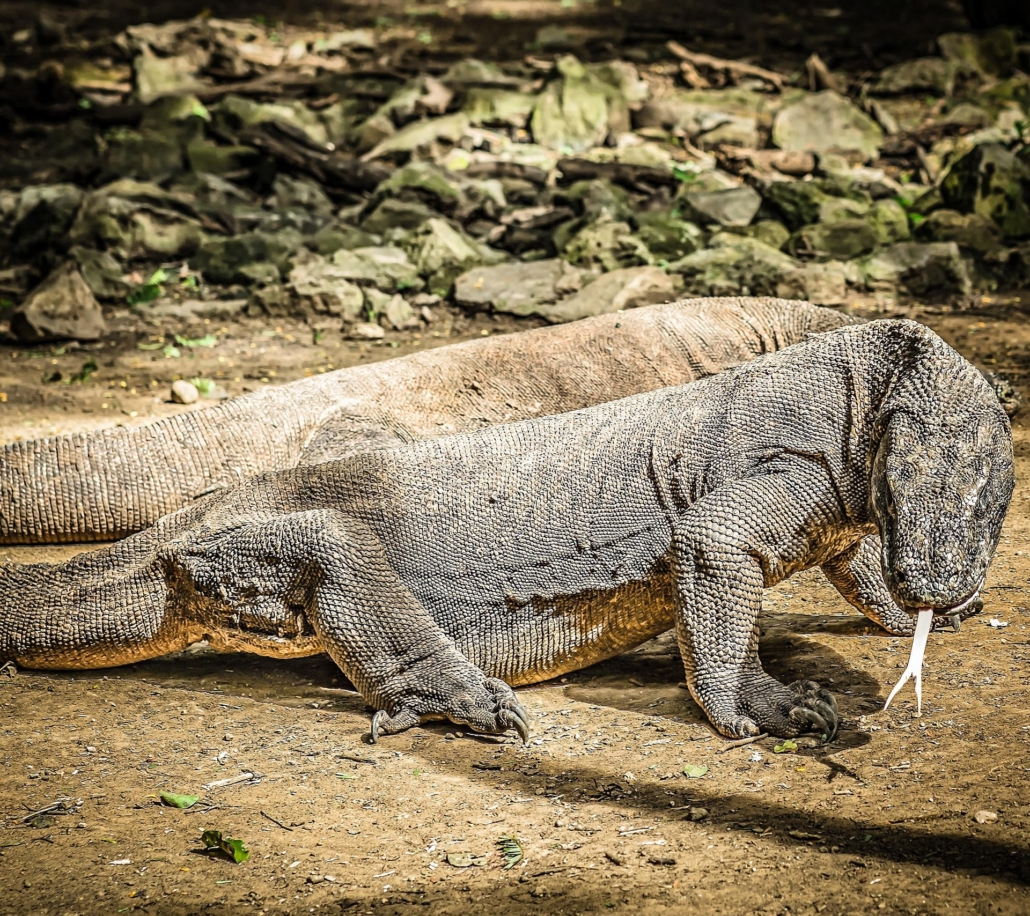
There’s a moment on an expedition cruise that is almost impossible to describe to someone who hasn’t experienced it. You’re on a small vessel, 22 people on board, anchored off a volcanic island in Indonesia. You’ve just come back from a dive alongside Komodo dragons. And that evening, you’re having dinner at a properly set table with good wine and exceptional food.
It’s the kind of experience that makes you wonder why you ever thought adventure and comfort were opposites.
Expedition cruising is one of the most exciting and underexplored categories in travel. It’s also one we think more of our clients should know about.
What Is Expedition Cruising?
Expedition cruising puts small ships into remote, extraordinary environments that larger vessels simply cannot access. The Galapagos Islands, the polar regions, the Indonesian archipelago, the Seychelles, the Mekong River delta. These are not places you can reach on a conventional itinerary, and they’re places that, once seen, tend to reorder what you care about in travel.
The ships are small, often carrying 20 to 100 guests, which allows them to operate in protected ecosystems and anchor in bays where no larger ship is permitted. This is not a compromise. It is the entire point.
At 22 guests on a dive-focused expedition in Indonesia, you’re not having a group experience. You’re having a personal one. You know the crew by name. The naturalist guiding your excursions has decades of expertise and can actually spend time with you. The dining table feels like a dinner party rather than a restaurant.
The Destinations That Make This Worth It
A few of the expedition itineraries that represent some of the most extraordinary travel experiences available anywhere:
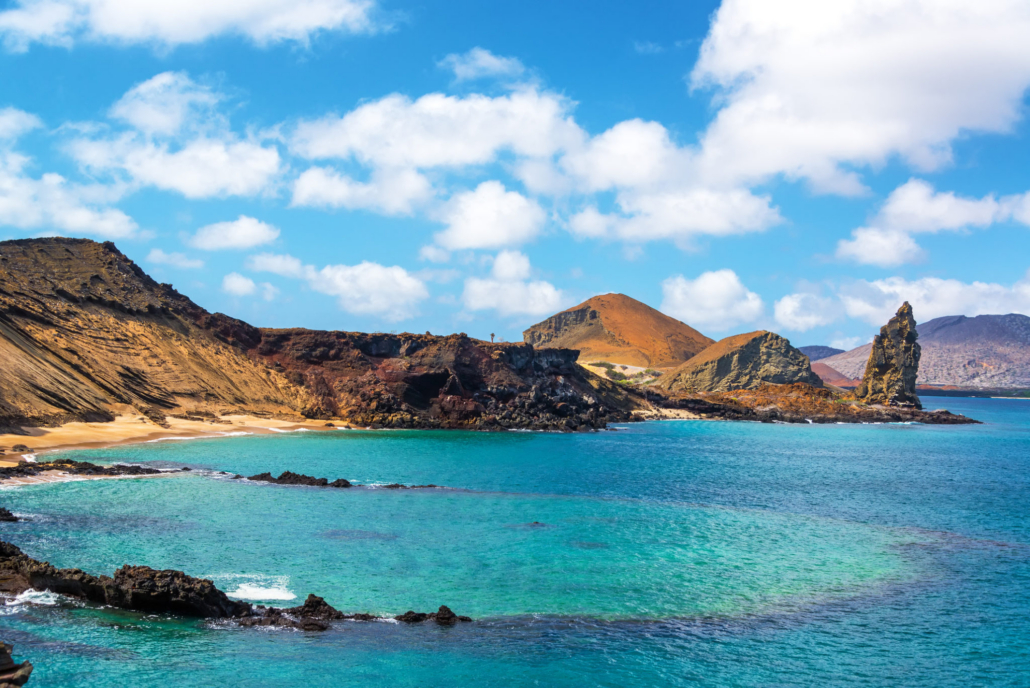
- The Galapagos Islands: Strict cap of 100 guests even on the largest permitted vessels. Wildlife that has evolved without fear of humans. Finches that land on your shoulder. Giant tortoises. Blue-footed boobies nesting three feet from the path. This is not a place you see. It is a place that stays with you.
- Antarctica and the Antarctic Peninsula: The most remote, most pristine, most visually overwhelming landscape on earth. Penguin colonies, calving glaciers, orcas. Some expedition lines have designed vessels specifically for polar voyages, with stabilization technology, ice-strengthened hulls, and interiors so stylish and comfortable you’d never guess you were at the bottom of the world.
- Indonesia: Komodo Island, Raja Ampat, the Banda Sea. Some of the richest marine biodiversity on the planet. Snorkeling and diving that makes everything else feel like a preview. Aqua Expeditions, which now operates within the Ponant family, has been pioneering extraordinary small-ship itineraries here for years.
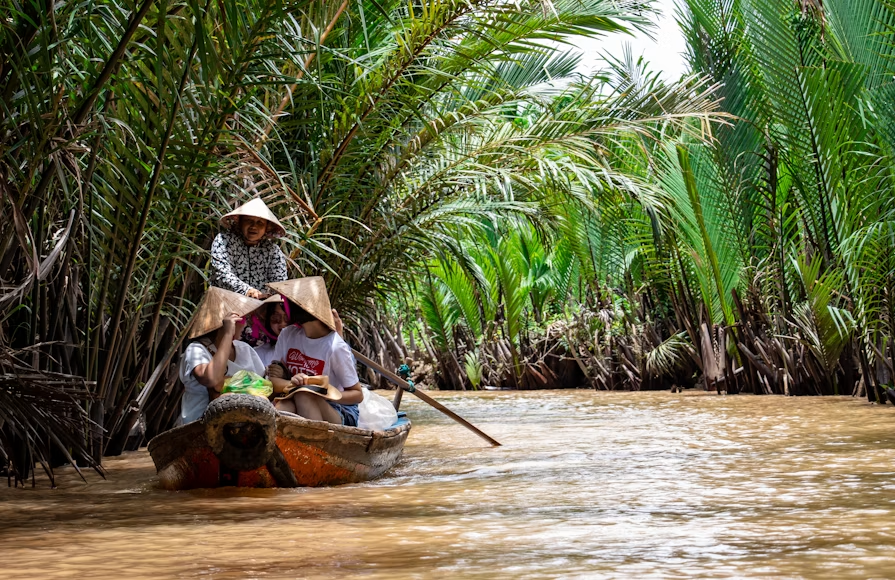
- The Mekong River: Small-vessel journeys through Vietnam and Cambodia that access villages, temples, and daily life that no land itinerary reaches. The pace is meditative, the experience genuinely immersive.
- The Seychelles: Remote outer islands, pristine beaches, nesting sea turtles, coral reefs. A yacht-scale vessel that moves between islands each day, delivering you to private beaches with no other guests in sight.
The New Generation of Expedition Ships
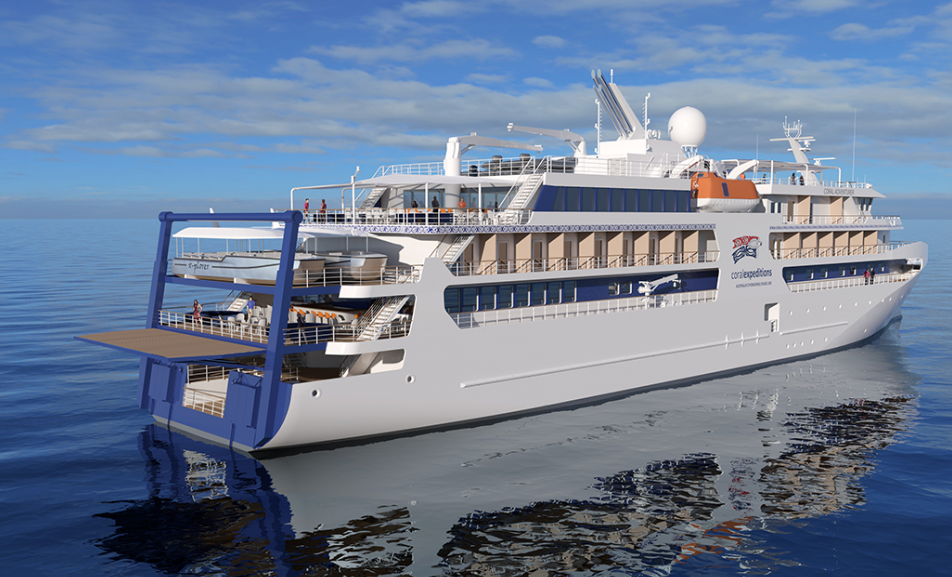
The word “expedition” used to conjure images of spartan bunks and institutional dining. That is emphatically not what this category looks like today.
Ponant’s Le Commandant Charcot, which ventures into polar regions, has been described as one of the most spectacular expedition vessels ever built. Think designer interiors, top-tier spa, multiple restaurants, and extraordinary suites with wraparound balconies, and then realize that this ship regularly parks next to icebergs.
Aqua Expeditions operates boutique vessels in environments like the Galapagos and the Amazon that combine rigorous expedition programming with genuinely luxurious accommodation and food.
The standard has shifted dramatically, and the traveler who loves both adventure and quality can now have both without compromise.
Who Expedition Cruising Is For
If you have ever said any of the following, expedition cruising may be the experience you’ve been looking for:
- “I want to see the Galapagos before I die”
- “Antarctica is on my bucket list but I don’t know how to approach it”
- “I’m tired of tourist-trail travel. I want something real.”
- “I love nature and wildlife more than monuments and museums”
- “I want to do something I’ll still be talking about in 20 years”
The age profile of expedition cruising travelers has also shifted significantly. The traveler who books Antarctica for their 40th birthday is increasingly common. Couples in their 40s and 50s, adventurous families with teenagers old enough for the programming, solo travelers who want to meet like-minded people in an extraordinary setting.
This is not a category reserved for retirees. It’s for anyone who has decided that the ordinary version of travel is no longer enough.
Ready to Set Sail? Let’s Plan Your Perfect Cruise.
At Wishes and Waves Travel, we do the research, the comparing, and the planning so you don’t have to. Whether you’re brand new to cruising or ready to trade up to something extraordinary, we’d love to help you find the right ship, the right itinerary, and the right experience for you.
Reach out to us today and let’s start the conversation. Your dream voyage is closer than you think.
FAQs
How far in advance should I book an expedition cruise?
Very far. Antarctica sailings in particular can sell out 12 to 18 months in advance. The most sought-after cabins on Galapagos vessels also go early. If an expedition destination is on your list, the sooner you’re in conversation with us, the better your options will be.
Is expedition cruising physically demanding?
It varies significantly by itinerary and operator. Some expeditions involve active snorkeling, hiking, and zodiac landings that require reasonable mobility. Others are much more observation-based. We match clients to expeditions that suit their physical interests and capabilities. There is an expedition experience for many different fitness levels.
Do I need to be a diver or snorkeler to enjoy an expedition cruise?
Not at all. Many of the most magnificent expedition experiences are available to non-divers: zodiac tours alongside penguin colonies in Antarctica, guided hikes through the Galapagos, river journeys through the Mekong. Diving and snorkeling are options, not requirements.
Are expedition cruises good for families with teenagers?
Some of the best travel experiences a teenager can have happen on an expedition cruise. Seeing Galapagos wildlife up close, kayaking in Antarctica, diving with manta rays in Indonesia. These experiences have a way of genuinely changing how a young person sees the world and their place in it. Age requirements and programming vary by line.
What should I pack for an expedition cruise?
Packing requirements vary substantially by destination. Polar expeditions require technical layering, waterproof gear, and specific footwear. Tropical expeditions like Indonesia or the Seychelles are much lighter. We provide detailed packing guidance as part of our pre-travel preparation for every expedition client.
How is seasickness managed on expedition ships?
In truly remote regions like Antarctica’s Drake Passage, sea conditions can be challenging and some motion is expected. Most expedition lines are forthcoming about this, and modern stabilization technology has improved significantly. Medication and motion management strategies are readily available, and most guests adapt within a day. For more protected waters like the Galapagos or Indonesia, conditions are generally calm.