Rail travel is one of the most rewarding ways to explore Europe and Japan, giving you a front-row seat to landscapes, culture, and cities that fly-and-drive itineraries almost never reach. If you have been curious about planning a train-based journey, we will walk through three of the most compelling routes in the world, and exactly what makes them worth your time.
There is a moment, somewhere between stations, when you look up from your coffee and realize the landscape outside your window is doing something extraordinary. A vineyard rolls into a medieval hilltop. A glacier appears between two peaks. A bullet train blurs past cherry trees in full bloom.
That moment does not happen on a plane. It barely happens in a car. But on a train, it is practically guaranteed.
Rail travel has made a genuine comeback, and not just for budget backpackers. Discerning travelers are building entire trips around iconic train routes because the journey itself becomes part of the experience. And honestly? Done right, a rail-based itinerary is one of the most elegant ways to travel.
I have helped clients plan rail journeys across Europe and Asia, and the feedback is almost always the same: they wish they had done it sooner. So let me walk you through three of the world’s most rewarding rail routes, and what actually makes them worth planning around.
Italy by Rail: Cities, Hill Towns, and Coastline
Italy is almost custom-built for rail travel. The country’s network is extensive, the scenery between stops is constantly changing, and you can cover an enormous amount of ground without once wrestling with a rental car, a GPS, or a parking garage in a walled medieval town.
Most itineraries start in Rome or Florence. Both cities reward multiple days of wandering. After you have visited the museums, walked the piazzas, and eaten your way through three courses at a neighborhood trattoria, a short train ride drops you somewhere completely different.
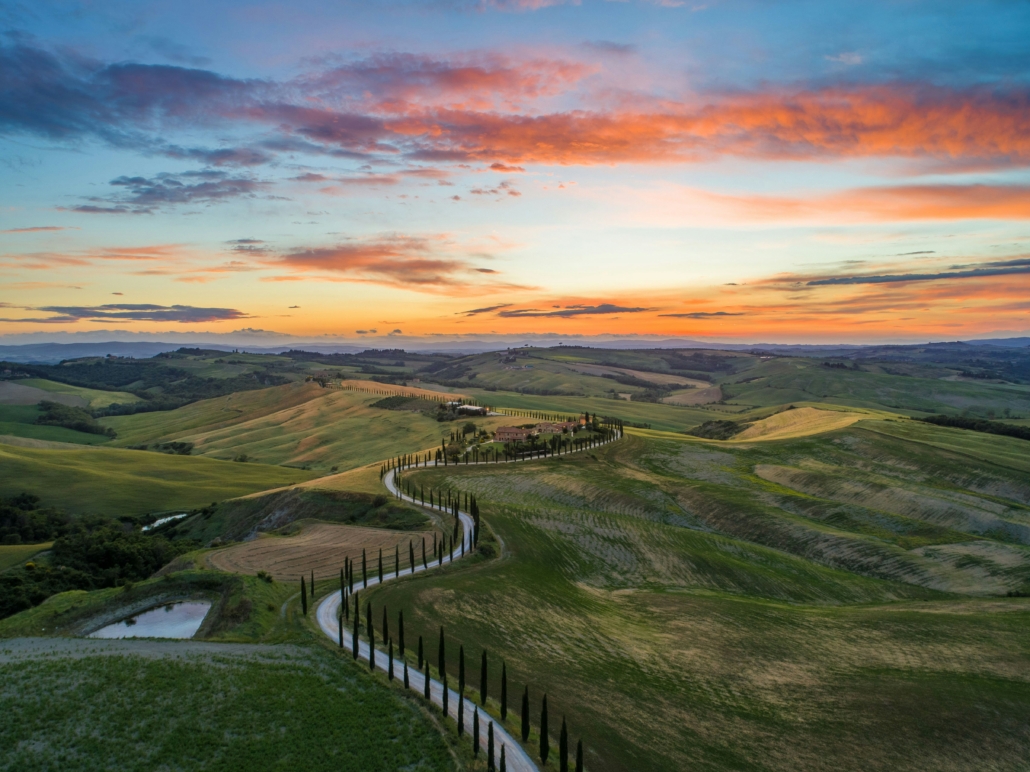
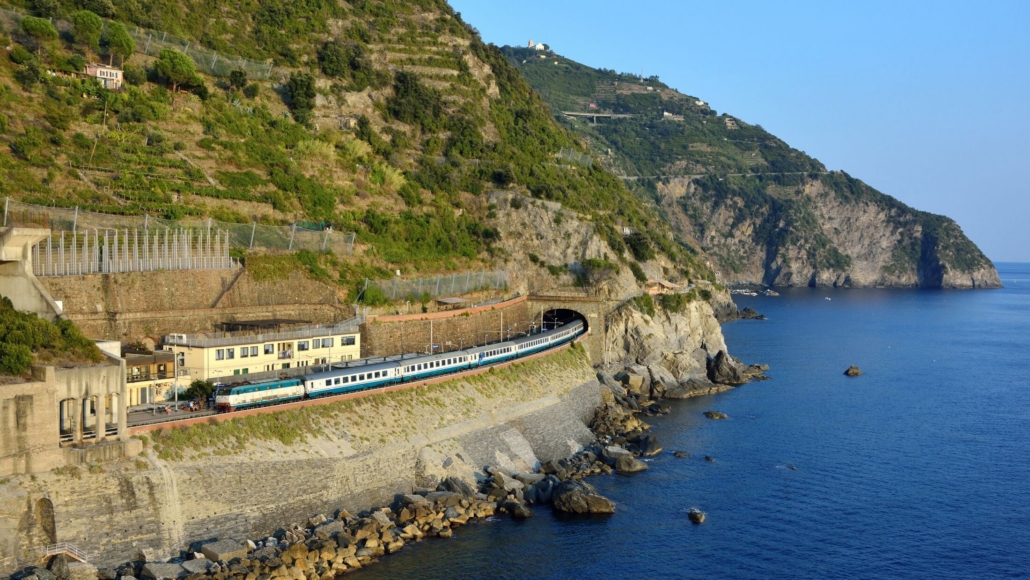
Florence to Venice, for example, takes under two hours on high-speed rail. Florence to the Cinque Terre is a manageable day trip by regional train along the Ligurian coast. And from any of these hubs, slower regional trains push out into the Tuscan countryside toward towns like Siena, Montalcino, or Montepulciano, where the agenda tends to involve wine, olive oil, and very little ambition.
That is the rhythm of a great Italian rail trip. Move between cities on fast trains. Slow down when you reach the countryside. Spend a few days in a hill town or a coastal village before catching the next connection. The variety is remarkable, and the logistics stay genuinely simple.
What makes this work is having someone help you sequence it. Italy’s rail system is excellent, but matching the right stops to the right pace, knowing which regional lines are worth the slower journey, and building in enough time at each destination without overpacking the schedule is where experience matters.
Scenic Rail Through the Alps: When the Train Is the Point
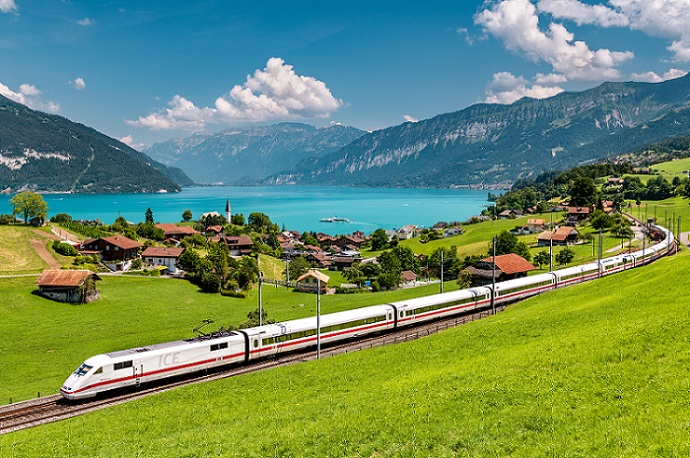
Switzerland does scenic rail better than almost anywhere on earth, and they do it with the kind of precision and comfort that makes a three-hour mountain train feel like a luxury experience rather than a commute.
The classic starting point is Zurich or Lucerne, both of which offer beautiful lakefronts, old-town architecture, and easy rail connections into the Alps. From there, several legendary routes branch out.
The Glacier Express between Zermatt and St. Moritz is perhaps the most famous, passing through 91 tunnels and over nearly 300 bridges on its eight-hour journey across some of the most dramatic scenery in Europe. The Bernina Express, connecting Chur to Tirano in northern Italy, crosses a UNESCO-listed railway line that climbs above 7,000 feet before descending into the Italian Lake District.
What strikes most travelers on these routes is how the train itself is designed around the view. Panoramic windows, upper-deck seating, and forward-facing cars mean you are not just moving through the landscape. You are watching it unfold, almost cinematically, with the Alps performing on cue.
Stopping in alpine towns along the way adds another dimension. A few nights in Zermatt (car-free, with direct views of the Matterhorn) or Grindelwald (surrounded by the Eiger, Monch, and Jungfrau) let you trade train seats for hiking trails, mountain gondolas, and evenings in quiet chalet restaurants. The trains work as the connective tissue between experiences rather than just transportation.
One thing worth knowing: Switzerland’s train system also connects cleanly into Austria, France, and northern Italy, which means a rail trip through the Alps can easily expand into a multi-country journey without any complicated logistics.
Japan by Train: Speed, Serenity, and Everything in Between
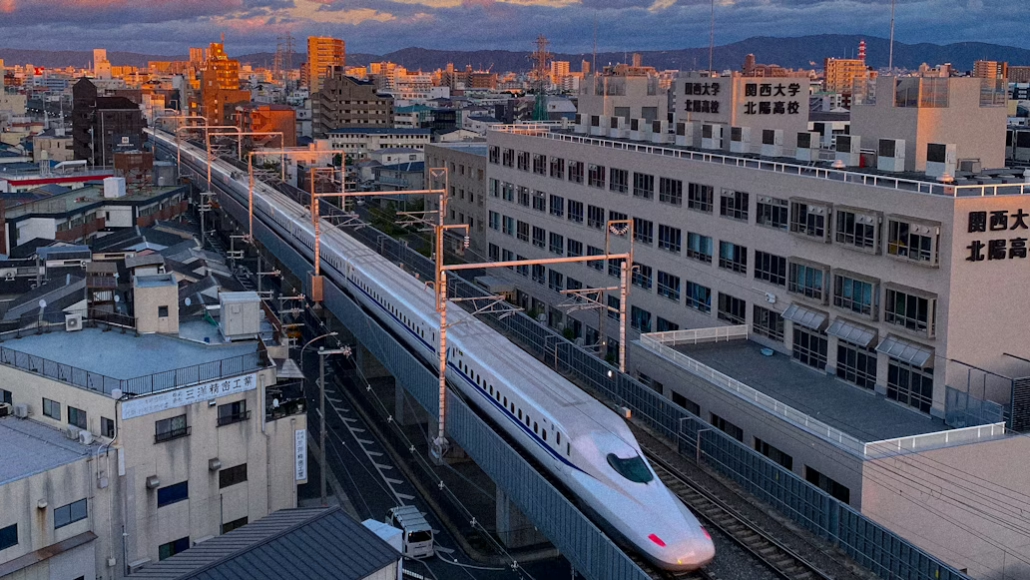
Japan’s rail system is in a category of its own. The shinkansen (bullet train) network moves you between major cities at speeds that still feel slightly implausible. Tokyo to Kyoto in roughly two hours and twenty minutes. Kyoto to Hiroshima in another hour. Osaka to Fukuoka in under three. The country encompasses an extraordinary amount of exploration in a relatively short trip.
But Japan’s rail appeal goes well beyond speed. The country’s local and regional lines take you into territory that most visitors never reach. Small onsen towns tucked into mountain valleys. Coastal routes where the train skirts the edge of the Pacific. Rural areas where the landscape shifts between rice paddies, cedar forests, and traditional farmhouses.
A well-designed Japan rail itinerary typically balances the two. You use the Shinkansen to move efficiently between major cities. Tokyo for several days, absorbing the scale and the contradictions. Kyoto for its temples, traditional streets, and cultural depth. Hiroshima and Miyajima for history and one of Japan’s most breathtaking shrine settings. Osaka for food and energy.
Then you layer in the slower routes. A morning train into the Japanese Alps to the old post town of Narai or Tsumago. An evening departure from Kyoto toward the ancient pilgrimage routes of the Kii Peninsula. A local line that climbs into the mountains above Nikko.
The Japan Rail Pass, purchased before departure, makes the economics work elegantly. One cost, unlimited access to most of the network for a set number of days. When I help clients plan Japan trips, sequencing around that pass is one of the most satisfying parts of the process because you can optimize both the experience and the value simultaneously.
One practical note: Japan rewards advance planning more than most destinations. Popular shinkansen routes, especially around cherry blossom season or Golden Week, book up quickly. Having someone who knows the system working on your trip makes a meaningful difference.
Why Rail Travel Deserves a Spot on Your Travel Radar
Beyond the scenery and the romance, rail travel offers genuine practical advantages worth naming directly.
City-center arrivals. Trains pull into the heart of cities, not airports located forty-five minutes from anything worth seeing. You step off at Rome Termini, walk twenty minutes, and you are at the Colosseum. You arrive in Kyoto Station, and the famous Nishiki Market is a short taxi ride away. The contrast with flying is significant.
No security theater. No liquid restrictions. No middle seats or overhead bin anxiety. Rail travel is fundamentally less exhausting than flying, which matters when you want to arrive somewhere with energy rather than just consciousness.
The journey is an experience. On a scenic rail route, the time between stops is not dead time. You are watching Switzerland happen outside your window. You are having a drink in the dining car as the Italian coast passes by. You are experiencing the country, not just transiting it.
For my clients who want more depth and less logistics, rail travel consistently delivers both.
Ready to Plan Your Rail Journey?
Building a rail itinerary that actually works, one that balances the right stops with the right pace and does not leave you stranded on a platform with a suitcase and no reservation, takes some expertise. I have done this across Italy, Switzerland, Austria, and Japan, and I would love to help you design something specific to how you travel.
Whether you are dreaming of a week through Tuscany, a scenic Alpine crossing, or a full Japan Rail Pass adventure, let’s build it together.
Contact us to start planning your rail journey today. I am always happy to talk through options before anything is booked.
Frequently Asked Questions
Do I need to book train tickets in advance in Europe?
For high-speed routes (Italy, France, Spain, Switzerland), advance booking is strongly recommended, especially during peak season. Prices are often lower when booked early, and popular departures do sell out. Regional trains in many countries allow flexible boarding without reservations, but if a specific connection matters to your itinerary, lock it in early.
Is a Japan Rail Pass worth buying?
For most visitors planning to travel between multiple cities, yes. A 14-day JR Pass covers the cost of round-trip shinkansen between Tokyo and Kyoto several times over, plus every regional train you take along the way. The calculation shifts if you are staying in one city for the majority of your trip. I can run the numbers based on your specific itinerary.
How do I handle luggage on train trips?
Luggage management is one of the most underrated parts of planning a rail trip. For Europe, most travelers do fine with a rolling suitcase and carry-on. Japan’s etiquette around large bags on trains is stricter. Many experienced travelers ship luggage between hotels using Japan’s remarkable takuhaibin (courier) service, which is cheap, reliable, and frees you to board trains comfortably. I walk all my Japan clients through this before they go.
What is the most scenic train route for a first-time rail traveler?
If you want maximum impact for minimum complexity, the Bernina Express in Switzerland is hard to beat. It runs year-round, the scenery is consistently stunning, and the route between Chur and Tirano is both UNESCO-listed and genuinely easy to navigate. For a longer commitment, the entire Swiss Travel Pass system is one of the most elegant in the world.
Can I combine rail travel with a cruise or resort stay?
Absolutely, and this is actually one of my favorite ways to design a trip. A river cruise along the Rhine or Danube, for example, pairs beautifully with a rail segment through Switzerland or into Prague. The train handles the longer inter-city legs, the ship handles the scenic stretches along the water, and you never repeat a view. I have built a number of trips around exactly this
combination.
How far in advance should I start planning a rail trip?
For Europe, four to six months ahead gives you excellent seat selection and access to advance pricing on the high-speed routes. Japan requires similar lead time, particularly if you are traveling during cherry blossom season (late March through April) or during Golden Week in early May. That said, I have worked with shorter timelines, so if your window is tighter, reach out and let’s see what’s possible.